newsback.jpg

Blog

What’s happening in the Alabama writing world…


Posts by Date
Posts By Category
 
 
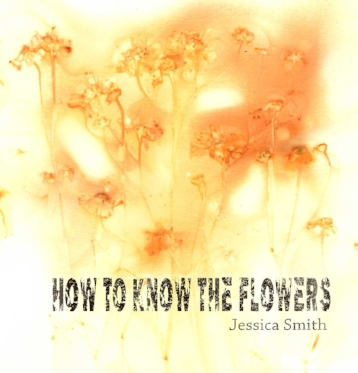
Birmingham poet Jessica Smith talks about her new collection, "How to Know the Flowers."
0.jpeg
 

ALINA: As the first AWC Awarded Member, I'd love to know a little about the soil that nourishes your poetry. I understand you have a new collection--and we'll get to that--but first tell us a little bit about your background, poetics, and previous collections. 

JESSICA: Well, I grew up here in Birmingham and both my grandmother (dad's mom) and grandfather (mom's dad) would buy me books of collected poems and read them to me; I'm not sure why. I remember my Paw-Paw bought me a book called First Poems of Minou Drouet at the Emmet O'Neal Library book sale (he loved library book sales) and told me she was my age when she wrote the poems. Although the truth of her authorship has been debated, reading her poems was probably one of the first things that affected my "ear" for the line in poetry. I was also fed some of the usual fare: Dickinson, Frost, the Romantics. I remember, with lightning clarity, the moment I read a poem by Alice Notley in a Scholastic Reader flier in 8th grade, "After Tsang Chih" (which is in her book Grave of Light). It was about being an adolescent girl, out of place in her environment, and seeing trucks go by in her desert-landscape home. This really appealed to my teenage feeling of being stuck in Alabama and wanting something more to happen in my life.

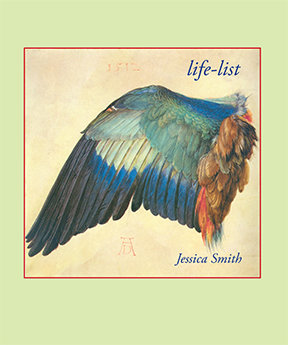
I was already devoted to poetry as a genre by that age, but I got obsessively devoted as high school ended, and I corresponded with Robert Creeley, who led me to study at the Poetics Program at SUNY Buffalo. This program isn't a creative writing program but a deep exploration of poetry and poetics, or the aesthetic theory of poetry; there, I studied under Creeley, Charles Bernstein, and Susan Howe, who shaped what I read and how I thought about it. I think my first book, Organic Furniture Cellar (Outside Voices 2006), really reflects these influences, as does the first half of my second book, Life-List (Chax Press 2015). All of those poems were written in the early 2000s, either during or right after my time in Buffalo. The second half of Life-List was written here in Alabama, more than ten years after the first half. By that time, 2013, I had come to terms with my need to write with "feeling."

The so-called L=A=N=G=U=A=G=E poets, a loose description of a group of poets that includes Charles Bernstein and Susan Howe, are often defined by the way they use language as a material rather than as a way of expressing feelings, although this definition is easily gutted upon any close inspection of works by poets like Ron Silliman or Lyn Hejinian. But I temporarily, for a few formative years of my writing life, felt that I couldn't write poems about my feelings. Once I broke through that self-imposed mandate, I became a better poet. Or perhaps it was the process of going from an emotional poet to a clinical poet to an emotional poet that made me a better poet. The resulting books, How to Know the Flowers (Veliz Books 2019) and The Daybooks (in process), are very emotional, but are also the most sophisticated use of form and style that I have achieved so far.

ALINA:. The way you describe a softening of form to make space for new "feeling" fascinates me. I love how you describe that motion in both your style and poetrics. When I read your poems or your pedagogies, I come away with the sense that you, among so many incredible Alabama poets, are perhaps one of the MOST deliberate and intentional in probing and adapting the relationship between form and poetics. Is this intentional? How does one part speak to the other? Why or why not?

JESSICA: I started writing the way that I currently do after I went to China when I was in high school. I wanted to write poems that could be read in any direction. My current poems cannot be read in *any* direction, but they do offer multiple directions. At about the same time in my life, I discovered the experimental music of John Cage, who also played with different forms in poetry, performance, art, and music, and I started corresponding with poet Robert Creeley, with whom I later studied at SUNY Buffalo's Poetics Program. Creeley famously said that form should be an extension of content, which is related to the earlier ideas among architects and artists that "form follows function."

In the Poetics Program, I was constantly challenged to understand and explain *why* I wrote the way that I did and to read many, many books of poetics and aesthetics. The way I write hasn't changed that much, but I have a wide background in poetics, aesthetics, and philosophy to explain "how things work"-- some of this can be read in my essay "The Plasticity of Poetry.”

I have always wanted-- since that trip to China-- to open up the form for multiple readings, because not everyone physically reads the same way. I have been interested in the way the words on the page seem to open a three-dimensional space in one's mind, which has been called variously "plastic" (like sculpture), "open field," and dance-like. One of my favorite responses to my poetry was a choreographed setting of some of the poems from my second book, Life-List. Brett Mastellar composed a soundtrack, the poems were projected on the wall, and Chelsea Warren and a group of dancers danced the poems. This seemed like an entirely appropriate "reading" of the poems.


ALINA: The poems in this book are so textured and palpable. If you had to pick ten words that voyaged with you while writing this book, what would they be?

JESSICA: Thanks! I tried to use as specific words as possible, partly to continue to teach my Wilderness Literature students about the world around them. My class with them was interrupted when I was fired; before that, we were out in the woods looking at, drawing, and writing about specific plants. So the words that drove the book were botanical names: indigo, coreopsis tincturia, catalpa, tulip poplar, azalea, marigold, mulberry, blackberry, retting, mordant. In my grief and in the feverish artistic mode that followed, I was mired in the botanical stuff of Birmingham. In that micro biome where one is physically in the dirt, among the leaves, getting one's hands dirty: in that meditative space close to the earth that gardeners know. The precise vocabulary of the nature near me and of the processes of dyeing helped bring the poems closer to that mental space where one is really pulled down into the subject.


ALINA: Speaking of subjects, there’s an elephant in the pixel-room. How does Alabama enter your poetry at all? And who are your favorite nonliving poets of place? Why?

JESSICA: My poetry, in How to Know the Flowers especially, is deeply tied to Alabama and the specific land of central Alabama in spring. I write about specific species that one encounters in the Alabama outdoors. I think if you are someone who is tied to the land-- a hiker, a gardner, a farmer, an artist-- these poems will deeply resonate with what you already know.

My second book, Life-List, ranges further geographically but also takes up specific species-- in its case, birds-- in each place. I want my poetry to not only be a record of what happened and who it happened to, but of where it happened and what non-human entities were there. So it's a biological, ecological record as well as a human record.

My very favorite "poet of place" is Lorine Niedecker, who is probably also my favorite poet in general. She was from Wisconsin and lived there most of her life. Her poems mention specific species that she saw around Fort Atkinson, WI. She writes in short lines and her rhythm is often like haiku, which is a form of Japanese poetry that is often also about nature. Of her poems, "Paean to Place" might be my favorite-- it's easily found online.


ALINA: I'd love to ask you to share a link to something you've published that's available online that you would enjoy sharing. At this moment in time. And, to round it out, a song that readers could listen to while reading your published piece, providing, in a sense, two readings, or two experiences of that piece--both guided somehow by you.

JESSICA: Since I've just mentioned Life-List, I'll share a link to these poems in Tarpaulin Sky which were later published in that book. As I said, Life-List is more about birds and How to Know the Flowers is more about botany, but they're both also about interpersonal relationships and memory.

As for music-- I listen to so much music it's hard to choose. People say that poetry is "like" music, and I'm not sure what they mean. I do know that poetry doesn't always have clear melodies, as contemporary experimental classical music and improvisational jazz do not. One of the first major influences on me-- on my poetry-- was John Cage, so his "Sonatas and Interludes" might be appropriate, or a colorful long piece by Morton Feldman, or an "organic"-feeling piece by Iannis Xenakis, or a piece that borrows from birdsong by Olivier Messiaen. I'll never get over Bach, or Brahms, or P.J. Harvey or Björk. I'll go with John Cage's "In a Landscape".

ALINA: Thank you so much for being present and writing through that presence, Jessica. I encourage fellow AWC members to click on the books below, and begin the adventure of reading you. After John Cage, of course.


Jessica Smith is the author of numerous chapbooks including Trauma Mouth (Dusie 2015) and The Lover is Absent (above/ground press, 2017) and three full-length books of poetry, Organic Furniture Cellar (Outside Voices 2006), Life-List (Chax Press 2015), and How to Know the Flowers (Veliz Books 2019). She is a member of the National Book Critics Circle and teaches at the University of Alabama at Birmingham.
Guest User
Writing as a form of international activism: An interview with Janet Johnson Anderson.

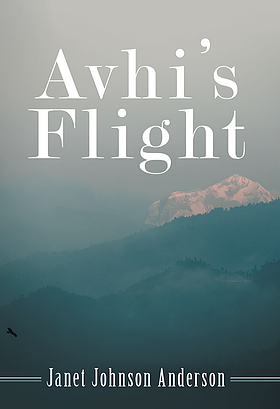
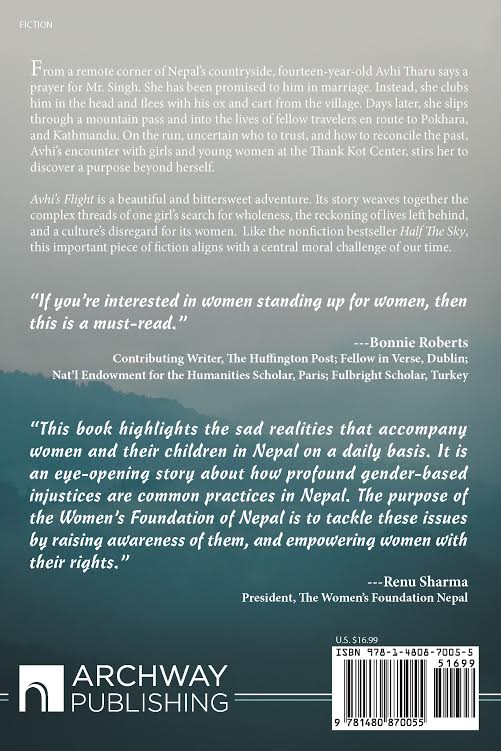
An Eye-opening Adventure into Nepal: An Interview with Janet Johnson Anderson about Avhi’s Flight.

“Having escaped a forced marriage, a girl’s difficult journey from the countryside of Nepal to Kathmandu sheds light on a suppressive culture, and discovery of purpose beyond self.”  That’s a unique storyline. How did you come up with a story that is in and about Nepal?

Though it’s a fictional story, it is based on facts I learned years ago when I served as a board member for Global Women. Our organization was at work in Nepal, Thailand, Moldova (the poorest European country) and other countries where sexual trafficking and enslavement is high. We helped support efforts to rescue and rehabilitate young women, and teach them job skills so they could become self-sufficient. Women in these regions already lack resources to combat poverty, injustice, and lack of educational opportunities, but often those who have escaped and returned home, are rejected by family and fellow villagers. I was touched by the stories I heard, and after meeting the owner of a sewing school called 777 Pokhara, I felt compelled to write a novel that could introduce American women, in particular, to the plight of women living in difficult places in the world. In my small way, I wanted to lend a voice to the many who are voiceless, who are abused, abducted, sold into brothels, sold into slavery, with little recourse.

That’s a large issue to take on. What do you hope your book can do?

It is a big issue. My story aligns with a central moral challenge of our time. When the Women’s March on Washington took place in January of 2016, I cried. I thought about the fact that no one is protesting or marching in the streets in Nepal for Nepal’s women and girls…and I decided that day to start writing this novel, to create a piece that I hoped could not be ignored. Because in Nepal there are not plentiful shelters, or food pantries. There are not lawyers working pro bono, and there are no authorities to turn to.

I know I am just one small voice, but I believe we are at a place in time when an understanding of such hardships might lead to change. I hope my book will further lines of communication, offer a springboard for discussion, and encourage more voices to rise up for those who remain voiceless in Nepal.

Are there other books like this story?

I don’t believe so. This is sort of an eye-opening adventure that is both beautiful and bittersweet. I don’t think any other book’s storyline weaves together the complex threads of one girl’s search for wholeness, the reckoning of lives left behind, and a culture’s disregard for its women. It’s sort of a fictional version of the nonfiction bestseller Half The Sky, except that my story is about one girl, not many girls from many different countries.

I believe there are not many, if any, novels about the societal underbelly of Nepal, a country known for great hospitality and “Namaste”.  I have the endorsement of The Women’s Foundation Nepal, which is at work tackling these issues by trying to raise awareness in their own country, and by trying to empower women with their rights. They wrote me that they were pleased about my book because it addresses some of the sad realities that accompany women and their children there on a daily basis. I don’t think they’ve endorsed any similar books.

So, only five sentences into your story, and your lead character has just killed a man?

Yes. That’s an exciting way to start a novel, isn’t it? We learn right away that fourteen-year-old Avhi Tharu has been promised to Mr. Singh in marriage, but instead, she clubs him in the head and flees with his ox and cart from the village. Women are not allowed to travel alone, so she is plagued right off the bat with some major decisions. Days later when she slips through a mountain pass and into the lives of some American travelers on their way to Pokhara and Kathmandu, she has more time to reflect upon her past choices, her village life, family and friends left behind, and the path for her future. I thought that would be fun to set most of that up on the opening page. People might want to read more.

Then how does your main character and the story speak to the world, if that’s your intent?

Well, Avhi represents many who come from the lowland Terai region or very poor countryside of Nepal. Americans and other foreigners regard Nepal as a peaceful country with a warm spirit. Hikers and mountain climbers yearn for the snow-capped Himalayan peaks. But most oppression in the world stems from poverty and lack of education. Nepal is no different. There is a tyranny of poverty, suppressed education, child marriage, slavery, sexual trafficking, and a caste system that subjugates women. Women and their daughters are deemed worthless, and there seems to be no cure. Many girls are sold or rented as indentured servants to pay a family’s debt. Girls have even been traded for an ox or a pig. Think about that. Girls in these poor regions have never been permitted to hope. We are all aware of many similar countries, where poor women are struggling, but there are no news headlines, no banners in the streets, no multitudes coming forth to stand in opposition or resistance. This story is one that many in the world can relate to, and those of us who are doing well in first-world countries should know about.

Your website says that your books reflect community and global needs. That they provide a voice for the voiceless, hoping to inspire other to lend a hand and heart in the world. What about your other books?

In June of 2011, I self-published a book of poetry as a fundraiser. I have children with special needs. After the April tornadoes, I wanted to help, but couldn’t go do clean-up with my children…not with noisy chainsaws. So, I thought as a writer, I could put together a book to sell and raise money to benefit those families affected by loss. I started writing in the dark by candlelight that April and by June I had a printer in Austin, TX, and a commitment from the owner of Books-A-Million to place my book in every store throughout the state of Alabama. Neither the store nor I took a penny, that way every bit of the $20 price tag went to victims. I printed 5,000 copies and we sold 3,000 netting $60,000 which was distributed through a few charities in North Alabama and the Birmingham area.

That book was quite the ordeal. It was hell every step of the way because in order to get a barcode and ISBN number, you have to be a publisher. So, I became a publishing house, Mirror Press, and then had to get a small business license and I knew nothing about starting a business, or a publishing business. The task to write, edit, print, distribute quickly and by myself, was daunting. BUT, it was also such a blessing to know the books were selling for two reasons. First, obviously, to raise funds for families in need.  But also, to lend a voice to these families about their loss and grief, and the feelings facing recovery. The media was strictly concerned about records…biggest storm, largest tornado since…numbers of deaths, length of destruction…numbers. No one was giving credence to the emotional toll. So, I was very pleased that we could raise money, but especially pleased that my words could offer comfort and a voice on behalf of, and for, those families suffering loss.

That book, by the way, is still available at my website: jjabooks.com.  I gave books to the hundreds of Army volunteers, to several churches whose buildings were completely destroyed, but obviously, I still have some left over. New and signed!

I have a novel coming out next summer that coincides with the 15th anniversary of Katrina and lends a voice to the despair New Orleans communities dealt with for years. It takes place four years after the storm, touches on black injustice amid two family sagas, corrupt politicians, and a murder investigation…just as Obama has made history as our first African-American president.  Ha. I do not like to simplify. Again, I hope to lend a voice to the families who were devastated for years and years after that disastrous hurricane.

When or how did you become a writer?

I became a writer the moment I lived alone as a young adult, and discovered there are not many you can call at 2 a.m. to talk with and work out life’s issues. The cat was good some of the time, but mostly, I needed to just pour myself out on paper to find some relief from my feelings and worries. I was a poet for decades. I am sixty now, so forty years ago…it was all poetry. It’s been all poetry up until about five years ago when I began writing my story The Ray of Hope about Katrina. I was regularly winning the AWC and ASPS poetry contests, contests in the Midwest and other areas of the South. I have been in forty literary journals, and won a couple hundred poetry awards. For nearly a decade, I was a regular contributing writer for The Upper Room’s Alive Now magazine, and spiritual journal Weavings. But all poetry. Avhi’s Flight is the second novel I’ve written, but the first one to be published.

Do you have anything else in the works?

I am currently trying to find a publisher for a children’s book I’ve written and illustrated about acceptance. I am also trying to find a publisher to do a fine arts book about my daughter’s paintings. The last few years I’ve been the marketing agent for my youngest daughter. She is 26 and has Down syndrome and autism. She is the South’s first artist with special needs to be given her own solo gallery art exhibit. She had a two-month exhibit in Huntsville, AL, and a three-month in Atlanta, GA, and we are on our way into several other Southern states. The cool thing, besides that she is breaking past barriers to make history, is that she has a voice. She is low-functioning…she cannot care for herself, she cannot read, write, or speak…until now. Painting has become her voice. And with recent national publicity, she is speaking to the entire country. So those events, her story and her work, and I hope soon…her book provides me a platform to address many societal issues regarding people with special needs, which again, allows me to speak up for those who don’t often get to speak up for themselves. I am trying to help the public get used to the notion that persons with special needs can do amazing things if they’re given the opportunity.  I hope her more than 200 paintings in the last two years can find a home with a publisher soon. Then, I guess I’ll go back to poetry for a while.

Besides writing, what is there to know about Janet?

Well, I am a Chicago girl. Born and raised along the North Shore about six blocks from Lake Michigan. Consequently, I love sailing, and cold weather. I have been in Huntsville thirty-four years, but I still miss the cold and snow. I played competitive racquetball for twenty-five years. Several years before children, allowed me the great opportunity to tour through most of Europe and the Mediterranean. I took up skydiving in college…the real thing, not this tandem stuff…the kind where you have to have days of training, practice arching as you fall, learn how to roll upon landing…all the scary stuff. I enjoyed a career in advertising and I love jazz. Jazz does for my ears what art does for my eyes…and it has been in the background egging me on when I write. I am a full-time caregiver for my youngest daughter, which means I am a night owl because I don’t get to start my own work until after most of the house has retired.  I became a member of AWC when I first moved south in 1984 (Yes, the year my Chicago Bears made it to the superbowl!) and have since, been a member on and off…when I can remember to renew my membership.


Janet Johnson Anderson

Janet Johnson Anderson

Janet Johnson Anderson was born and raised along Chicago’s North Shore.  She has been an advertising executive and public relations professional for more than 30 years.  She moved south in 1984, and is presently active as a free-lance writer and consultant to area businesses where she resides in Huntsville, Alabama. She is a public speaker and has taught poetry workshops within the Huntsville City School system to elementary, middle, and high school students.  She is a painter and literary writer as well, with more than 40 works in literary formats including Poetry Today, Piedmont Literary Review, Earthwise Publications, Dream Int’l Quarterly, Fine Arts Press, Winewood Women Anthology, The Poet, Crosscurrents, Backbone, American Poetry Anthology, Nimrod, Quill Books, The Beacon Review, Ordinary and Sacred as Blood: Alabama Women Speak. She was a regular contributing writer for both The Upper Room’s Alive Now magazine, and spiritual journal Weavings for more than a decade. Her 2011 book, After the Tornadoes, Reflections for Recovery, raised $60,000 for charities supporting storm victims in North Alabama and Birmingham.

Janet is both an advocate for the special needs population, and for women and girls worldwide where there is a lack of resources to combat poverty, trafficking, injustice, and lack of educational opportunities. She hopes her book, Avhi’s Flight, will encourage dialogue, and lend a voice to the many in Nepal who remain voiceless. Learn more from her website.

Guest User
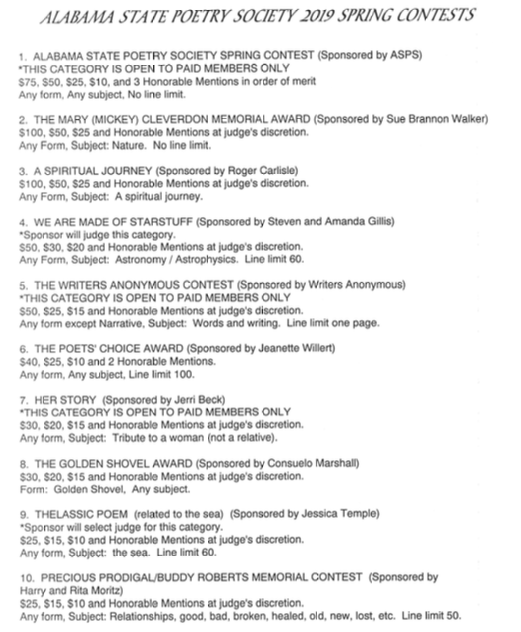
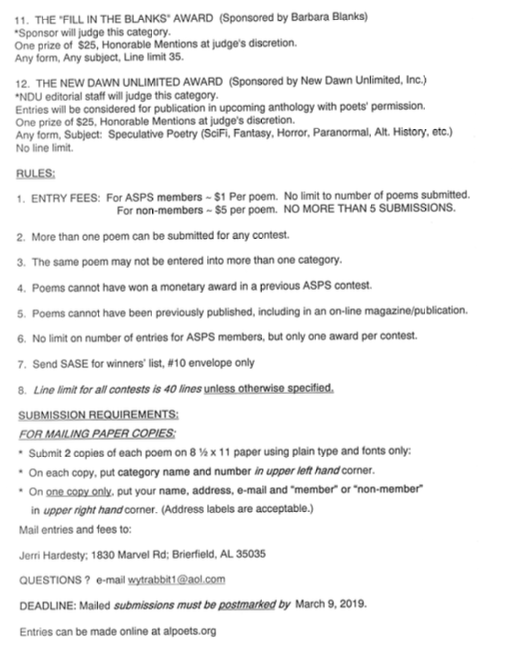
Alabama State Poetry Society Spring Contests and Workshops

Alabama State Poetry Society Contests are now open for submissions

Deadline is March 9, 2019.

The contest rules are posted online and available to everyone.

Submissions to contest are now being accepted electronically as well as via snail mail. For those who prefer to submit online, you can do so right here.

The list of contests (and information for snail-mail submissions) can be downloaded in PDF here.

Alabama State Poetry Society is so proud and grateful for the long service and mentorship offered by 2018 Poet of the Year, Jeanette Cale Willert.

Alabama State Poetry Society is so proud and grateful for the long service and mentorship offered by 2018 Poet of the Year, Jeanette Cale Willert.

Spring Meeting of ASPS in Orange Beach Alabama

Apr 13, 9:00 AM – 3:00 PM

Workshops with hot buffet lunch followed by business meeting and awards!

Orange Beach Public Library, 26267 Canal Rd, Orange Beach, AL 36561, USA

For those arriving on Friday, April 12th, there will be a Round Robin meet-and-greet the night before at the Gulf Restaurant from 6:00 to 9:00 pm. Bring poems to read.

You can register for tickets online. New members welcome. Or, you could be like many of us who became ASPS members in order to attend a workshop.

Learn about how to nominate a member for Book of the Year or Poet of the Year..

Guest User
This is the story of his life: A conversation with T. J. Beitelman.
0.jpeg

In his own Confessions, St. Augustine wrote, “The punishment of every disordered mind is its own disorder.” This is the story of his life—is just this: a rite of reconciliation, a penance of prayers that might pull a new order out of the chaos of any ordinary, twenty-first-century Self. The aspiration: a new set of psalms in the voice of a ventriloquist, shouting into the residual wind God used to exhale the whole world. The realization: one small poem or mantra—recited, re-seen, re-made, over and over and over again—can somehow make this a life worth living.

Wherein Alina Stefanescu chats with T.J.Beitelman about his recent book, This Is The Story of His Life (Black Lawrence Press, Dec. 2018).


 ALINA: “This Is the Story of His Life” read like a fascinating spiral, a recursive circle of turning and returning that excavated an event horizon. Since the “spiral” is not yet acknowledged as a genre by the literary establishment, how would you classify this fascinating book? Why? And how does genre inform or disinform your writing?

 T. J. When the production process started, I wanted to be more overtly coy about genre – call it a lyric memoir or even a novel – but my publisher (rightly, I think) thought that would be misleading to potential readers. I certainly didn’t want it to seem like a gimmick to sell more books.

 The truth is, it’s not a memoir. It’s not a novel. Is it poetry? It’s not not-poetry. (I mean, it even rhymes in places!) And then there’s my answer to question two (below) —its influences are, for the most part, books of poetry. Then again, it announces itself as a story. A life story, no less. And I think the whole is probably greater than the sum of its parts. So to call it a collection of poems—to call each individual iteration of the “story” a “poem”—that feels a little misleading to me too.

 In general, I’m a poet (by training and also by sensibility) who prefers to write (and read) novels and other long-form prose. So my books tend to be whole things, commonplace books if you like. More or less connected by narrative elements and if not narrative ones then thematic ones and if not thematic ones then formal/structural ones. Everything is allowed in.    


In general, I’m a poet (by training and also by sensibility) who prefers to write (and read) novels and other long-form prose. So my books tend to be whole things, commonplace books if you like. More or less connected by narrative elements and if not narrative ones then thematic ones and if not thematic ones then formal/structural ones.
— T. J. Beitelman

ALINA: “A poet by sensibility.” I appreciate the sense and sensibility. Given the scope of the narrative and the interesting ways in which the narrator is placed and displaced, I thought of Fernando Pessoa a few times while reading. I’m curious about what were you reading while writing this—any inspirations or tandem conversations or dialogues with other texts?

T. J.: I had recently discovered the work of Darcie Dennigan, which turned out to provide an invitation back into writing poems. I had just been writing prose – a weird memoir/cultural-commentary-type thing and a weird novel. I wasn’t sure I’d write poems again. Then I read Dennigan’s first book, Corinna A-maying the Apocalypse, and I felt the pull back into the lyrical impulse. I used to tell people that I wrote poems when I got tired of trying to make sense. It was a cheeky claim, but it was more than half true. I think I had “given up” writing poems because I, in turn, got tired of not making sense—of not connecting with readers. Dennigan’s book showed me that it was possible to engage/indulge a wild lyricism while still making a certain kind of sense – particularly in terms of emotional accessibility. To operate with a clear and coherent logic, albeit one that is intuitive, intense, rhythmical and not linear or bound by the limitations of cause-and-effect. Also, I just love the language of that book: it’s a book with narrative impulses (poems that have characters, settings, causes, effects, climaxes), but on some level its attention to sound, to individual words and their relationship to other words, is its alpha and omega. In that way, I guess it operates somewhat more like music does. (Music with lyrics, I mean.)

Looking back now, I can see some other influences: Robert Hass’s Human Wishes, particularly the form and structural arc of a poem like “Spring Drawing 2.” Also the multi-voiced ventriloquism of Berryman’s Dream Songs, its unreliable narration, the veil of neurodivergence. But those weren’t conscious influences at the time. Beckett’s Waiting for Godot is probably in the vicinity, too. Again: not consciously, but maybe moreso than the others. Just because I do see my book as a dramatic dialogue, of sorts. (Is that the proper classification? Maybe-yes-no? Hmm…)


ALINA:  I love how the cover matter of this book skipped out on blurbs. As a physical, text-based object, it felt closer to a work of art than a work of sale (or a product). This inspired me to wonder about the extent to which blurbs distract us from immersion in the book—from leaving the short of our daily lives and checklists in order to experience an embodied text. I can’t explain why there was a certain reticence to the quality of the presentation that made space for reverence. I can, however, ask what you think about the future of blurbs? Do they matter? Why or why not?

T.J. It does my heart good to hear that. This goes back to your first question: what is this thing? If it doesn’t have blurbs, it becomes more of an artifact than a product. And if it doesn’t announce itself as poetry or fiction or whatever – and there are no context cues (i.e., poets blurb poets; novelists blurb novelists; etc) – the burden (opportunity) becomes the reader’s to decide how to process this thing she holds in her hands. Or (and) you’re forced to take this somewhat unreliable speaker at his word when he recites, like a mantra, over and over again: “This is the story of his life he drew up around himself: …” He says it’s a life story (or a collection of them), so that’s what it must be.

At any rate, this lack of blurbs or much artifice on the cover or in the front or back matter -- that was a conscious decision on the part of my publisher and me.

With that said, I think blurbs can matter; there are books for which they do important work—either in terms of sales and promotion or sometimes even in terms of providing those context cues I was talking about. And I definitely read blurbs, and I enjoy writing them. They’re odes, mini-essays, ars poetica. I think you can tell when somebody really loves a book And if a writer you love loves a book – if Zadie Smith or Darcie Dennigan or Michael Ondaatje loves a book, I want to know about it, and read it. Admittedly many blurbs don’t convey this sort of enthusiasm, and so they seem immaterial – a rote exercise of sound and fury signifying not very much at all.       


ALINA:. Two or three words that kept coming up as you wrote this book. Why? In what context?

 T. J. Well, I mean, literally the mantra that starts each (for lack of a better term) poem – “This is the story of his life he drew up around himself: …” – kept reverberating in my mind. I didn’t know what that meant. How does someone draw up a story around himself? And yet each iteration is an attempt to show how this “he” (and who is this “he”?) did just that. The odd thing was that this reverberation/reiteration would intrude on me so insistently, like it wasn’t my voice at all, like I was channeling something -- such that I found myself having to write these new iterations on receipts, menus, even in books…whatever I had on hand. Sometimes dangerously so: a fair bit of the last poem was jotted down in stop-and-go interstate traffic; I wrote it in the white space of a literary magazine I happened to have in the passenger’s seat of my car. (Do not try this at home!) And I did write them all by hand – at least in first-draft form. That was an important part of it, perhaps even a literal connection to the act of “drawing.” The physical and visual aspects of handwriting.   


ALINA: That makes sense. The book really feels hand-written…. it feels personal, intimate, and yet ethereal. If I needed a name for style, I might call it Cosmic-Confessional.  Given the unique sonic effects and musical elements of the poems, I imagined Arvo Part in the background. Did you listen to any particular music that influenced this text as you were writing it? Alternately, is there music you think accompanies this text in an interesting way?

T. J. Probably In the Aeroplane Over the Sea by Neutral Milk Hotel – it’s wild and weird in the way Dennigan’s Corinna is wild and weird – with its oblique gestures at narrative, its strange mix-and-match of sounds and instruments, and its clear commitment to emotional accessibility, authenticity. I don’t know that it was a conscious influence, but I was listening to almost exclusively to that album, on repeat, in its entirety, as I often do (no wonder lines repeat in my head…) for the better part of a year, around the time I was writing this book. That album is also, in a very loose way, a redaction of another text (The Diary of Anne Frank). Not only does that sort of thing happen, on a smaller scale, in This Is the Story of His Life (allusions and hat-tips to other seminal texts), each iteration of “This is the story of his life he drew up around himself: …” is, in itself, a redaction, a retelling of “his” story. I’m increasingly fascinated by that impulse to tell and retell, allowing for (even inviting) the inevitable alteration, amendment, re-emphasis, re-invention that is an inherent part of that process.   

ALINA: I want to end this with a poem from the book, and to thank you, T. J., for taking the time to share with us.

event horizon.png

68.png

TJ Beitelman is a writer and teacher living in Birmingham, Alabama. He’s published a novel, John the Revelator, and a collection of short fiction, Communion, as well as two collections of poetry: In Order to Form a More Perfect Union and Americana, all from Black Lawrence Press. His stories and poems have appeared widely in literary magazines, and he’s received fellowships from the Alabama State Council on the Arts and the Cultural Alliance of Greater Birmingham. He taught writing and literature at Virginia Tech, where he earned an M.A. in English, and at the University of Alabama, where he earned an M.F.A. in creative writing and also edited Black Warrior Review. He currently directs the creative writing program at the Alabama School of Fine Arts in Birmingham. He can be found on-line at tjbman.me.

Guest User
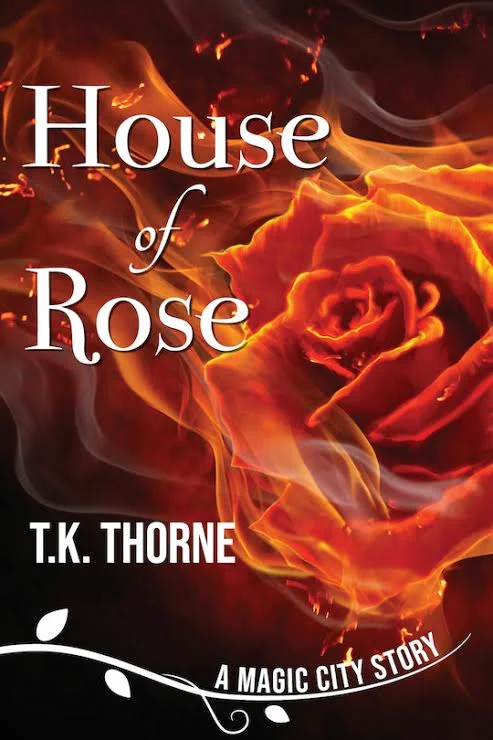
T. K. Thorne ventures into crime fiction: An interview about House of Rose.

Where did you come up with the idea for a story about a police-witch in Birmingham, Alabama?

To start with, let’s get something clear: I’m a retired police captain with the Birmingham Police Department, but I’m not a witch, at least not on my good days. Murder, mystery and mayhem weren’t on my list as a reader or writer because they never felt like entertainment; they felt like work. But spice that pot with a bit a magic, and I’m in!

Who knows where book ideas come from? Sometimes you can put your finger on it, but this time, I was just brushing my teeth when three little words popped into my mind, along with a powerful sensation that some kind of story was lurking about. I had no idea what it was, other than the words were spoken to a police woman. So I quickly spit (toothpaste) and rushed to my laptop, where I learned the words were connected to a beautiful young rookie named Rose Brighton who saw something impossible while she was chasing a suspect down a dark alley, a chase that ended with her in the middle of every police officer’s nightmare—she’s shot a man in the back.  

I was intrigued. Why did she do it? How was she going to put her life back together and figure out what really happened and who she really was? The mystery of the three words has turned into three Magic City books—House of Rose, House of Stone and House of Iron. Those, by the way, represent the three elements that are needed to make steel and are uniquely found in proximity in Birmingham, Alabama, the reason the city grew so rapidly and was nicknamed The Magic City.

So this is your first venture into the crime genre?

House of Rose is my first crime fiction foray. My two previous novels are ancient historical fiction structured around the stories of two unnamed biblical women—Noah’s Wife and the wife of Lot in Angels at the Gate. I have written a nonfiction book, Last Chance for Justice, about the behind-the-scenes investigation of the 1963 Sixteenth Street Baptist Church bombing.  Writing that story prepped me for House of Rose by requiring that I call on my experiences and knowledge as a police officer. I’d been out of the field for many years, but the feelings and perspectives of being a law enforcement officer is something you never loose.  It’s possible that writing that story laid the mental groundwork for writing about police work in a novel.

What do you enjoy most about writing process?

I truly love having a strong character who takes the reins and speaks and acts on his/her own. It’s a joyful experience to have figments of my imagination spring to life in a way that feels independent of me. Of course, I know that’s not what is really happening, that I’m in the grove of allowing things to flow from my subconscious, but it is still magic and what drives me to create.

I also enjoy what I call “brain #2,” where the craft of writing comes in, and I can take the raw stuff and shape it into something effective. It gives me satisfaction to use my skills to make the story experience something seamless and engaging for a reader.

Do you consider yourself a southern writer?

Since I was born in Alabama, attended college in Alabama and all three careers were in Alabama, I don’t see how I could be anything else!  I do love to travel and was entranced to visit the locales of my first novels in Turkey and Israel, but House of Rose is set in Birmingham, Alabama, on the Southside, which is where I first became a cop and lived for a decade. It was fun to have my character visit the restaurants and landmarks I know so well. It feels as if I am sharing those places with friends.


How did you become a writer?

Writing, at it’s heart, is story-telling. The first stories I created were for myself to keep the monsters from emerging when the lights went out. Stuffed animals went to bed with me, particularly a beautiful rabbit with long-lashed eyes that shut when you turned her on her back. I named her “Peter” because, at age four, that was the only rabbit name I knew. Peter, I decided, had magical powers that could protect me from the monsters, as did Spot, who was red with white spots and button eyes. The stories I told myself expanded into scenarios and interactions between the stuffed animals and how they fought evil.  Later, I became the neighborhood children’s director for the play-stories we enacted. It was fun—since I assigned the roles, I always got to be the queen! That was the beginning. It’s never stopped. As a police officer, I often day-dreamed about plots and characters as we patrolled deserted night streets. It kept me entertained until the adrenaline-interludes which provided some of the fodder for my stories.


I understand you’re also working on another civil rights book about Birmingham. With that and two ancient historical novels, this new book is a totally different genre for you. Why do you decide to cross genre lines?

Crossing genre lines has always been verboten or at least, not recommended for writers who want to pursue successful careers. That’s why nom de plumes were invented. It was thought (by publishers) that readers would be confused and disappointed if they followed an author thinking they were going to get romance and it turned out a new book was a western or a literary work, like a reader can’t tell the difference! I give readers more credit than that. Why should I assume they are limited in their interests or aren’t willing to try something new, especially in the hands of an author they trust? I personally love being surprised by something fresh, being stretched by new experiences and ideas. Everything is fodder for my mind and when things go into that dark, chaotic space, they come out in my writing. That’s what creativity is—the juxtaposition of the strange and the familiar, the known and unknown, all mixed together in the exploration of what it means to be a human being. In it’s own way, that’s what this new book—House of Rose—does.

Last question—So now that you’ve got me really curious, what were the “three little words” that were a catalyst for this trilogy?


“You’re a hero.”

T. K. Thorne

T. K. Thorne

T.K. Thorne’s childhood passion for storytelling deepened when she became a police officer in Birmingham, Alabama.  “It was a crash course in life and what motivated and mattered to people.” In her newest novel, HOUSE OF ROSE, murder and mayhem mix with a little magic when a police officer discovers she’s a witch. Both her award-winning debut historical novels, NOAH’S WIFE and ANGELS AT THE GATE, tell the stories of unknown women in famous biblical tales—the wife of Noah and the wife of Lot. Her first non-fiction book, LAST CHANCE FOR JUSTICE, the inside story of the investigation and trials of the 1963 Birmingham church bombing, was featured on the New York Post’s “Books You Should Be Reading” list. T.K. loves traveling and speaking about her books and life lessons. She writes at her mountaintop home near Birmingham, often with two dogs and a cat vying for her lap.  

Guest User
Blackberries, the Coosa River, and bags of dry beans: Tina Mozelle Braziel's new poetry collection.
Tina Mozelle Braziel, winner of the 2017 Philip Levine Poetry Prize

Tina Mozelle Braziel, winner of the 2017 Philip Levine Poetry Prize

Memory is a seductive mistress. Poet Gerald Stern once said: “The obsession to remember is a loyalty to something, isn’t it? It’s often a loyalty to things that in and of themselves might seem insignificant..”

What loyal rememberings do you revisit in your poems? What remembering do you want to revisit but find yourself stymied? Why? Explain.

I return to memories that question the worth or value of something. Sometimes it is as ordinary as the bad beans my mother had culled out of a bag of dry beans. Although my mother said nothing would come of them, I planted them; they sprouted.  My mother took those sprouts as proof of my green thumb. But for me, they cultivated my sense of relativity: beans that would have been bad in the pot became good in the ground. When I write about this memory in “Mama Says Nothing Good,” I suppose that “what is bad is just something good / appearing where it shouldn’t.” While I seriously doubt that is the lesson my mother wanted me to take from that experience, it helped me negotiate other value judgements, particularly those about class.

My fondest memories are of growing up in Clear Springs Marina and Trailer Park on the Coosa River. For me, it was a place of beauty (light shimmering on the water) and abundance (fish frys and blackberry-picking). I am aware that most people associate trailers with trash. But I can’t reconcile my memories with that, so I write back, hoping people will find some value where they hadn’t before, in places or people that are disparaged. If nothing else, I’d like my poems to encourage readers to give themselves a break, a moment to smile into a soft breeze and watch the leaves lift instead of frantically chasing what we call the American Dream which feels more and more like a mandate. Living on the Coosa taught me the value of relaxing and watching the egrets finding their roosts in the branches. My loyalty to that place runs deep, deep enough that I’ve been accused of having a trailer park chip on my shoulder. I have no intention of knocking it off.

I write about my childhood and about building a house by hand with my husband. Maybe remembering home is how I best grasp and find significance now. However, my brain is always replaying memories of random landscapes. It is as if I inhabit a skewed greater romantic lyric. For example, as I practice yoga, I vividly remember an old commute down highway 22 when it was mostly woods and old limestone quarries or I think about headlights sifting through the pines when I was searching for a campground in Red River Gorge. What those reoccurring landscapes mean, I wish I knew.

You won the 2017 Philip Levine Prize, a prestigious national award, for your forthcoming collection. Tell me a little bit about this collection--how it came together, the bones, the ligaments, the tender parts.   

Known by Salt puts its muscle into questioning the divisions made by class, gender, and between humankind and nature. I’m a first generation college student. While I love much of what I’ve learned in school, it is also a place where I encountered stereotypes about the working class. At its bone, Known by Salt is my way of saying that I am of that place (trailer parks) and those people (construction workers). I hold an MA and MFA in poetry, but I’ve learned grit, wisdom, and feminism in fast-food joints, forests, building sites, and strip clubs. I want to speak to how much we need and should appreciate those who build our bridges and serve our food.  Known by Salt’s most tender parts are love poems, to my family, to the Coosa River, to poets I adore, to the creatures inhabiting Alabama’s wooded ridges, and to my multi-talented, raised-on-a-farm, novelist husband.

Known by Salt came together as a response to a rejection to a chapbook manuscript in 2014. PorkbellyPress said they liked my voice, but they wanted something more focused. Until then, the ligature between my childhood and my recent house-building seemed strong, but the rejection made me realize that it may take a full-length book to make those ligaments work for a publisher and a reader. In 2015, I re-submitted a focused manuscript of house-building poems to PorkbellyPress. They accepted Rooted by Thirst and published it in 2016. But from the time of that rejection to when Known by Salt was awarded the Philip Levine Prize, I continually revised my book-manuscript, adding and subtracting poems to strengthen the connections between where I come from and who I am. Poet Lauren Slaughter and my husband James Braziel were wonderful first readers of those multiple revisions.

In the poem "I've Learned," you stun the reader with this simile: "Wear a dress so tight I look/ like a can of busted biscuits?" How does a poem start for you? Does it begin with an image or a feeling you want to image? If you had to analogize it, what process does writing a poem most resemble?

I can’t take credit for that simile though I wish I could. For a few years, I took a yoga class in rural Alabama. Another woman in the class happened to mutter that yoga pants made her look like a can of busted biscuits. I was thrilled by the image and knew that I wanted to use it somewhere somehow because it was so vivid, so perfectly visceral.

“I’ve Learned” didn’t start there though. Instead, it was sparked by my great admiration of the many lizards that live around my house and yard. I’m fascinated with their bodies and how they hold themselves with such ease, it doesn’t seem like holding at all. That and I’m flattered by how they look me in the eye, cock their tiny heads, and flare their throats (a courting gesture) as if I’m one hot lizard lady. I liked thinking about them and writing about them, so I had some lines about lizards in my notebooks already. Overhearing the busted biscuits quote helped bring it all together.    

Often writing poems feels like collage making to me. I write in multiple notebooks, so when I’m pulling together the images and language for a poem, I’ll have three or four open on my desk so I can draw an image from one notebook, a phrase from another, an ending from still another, until something like a whole poem comes together. Another, more southern, way of imagining my process is it is as if I’m “fixing my plate” from a random collection of dishes I prepared and plattered earlier.

But to answer your question more specifically, poems typically begin with images for me. I agree with Mark Doty in “Souls on Ice,”  “Our metaphors go on ahead of us. They know before we do.” Like Doty, I see my role as a poet is to attend to the world, its images, and then unfold the meaning found in them. It may be more honest to say that Doty gives me permission or encouragement to try that and to believe that “metaphor [is] the advance guard of the mind; something in us reaches out, into the landscape in front of us, looking for the right vessel, the right vehicle, for whatever will serve.”  To me, that is the pleasure: discovering that bit of myself that reaches to lizards and busted biscuits to be made known.  

Tina, I love how much of your world--the daily enchantments, encounters, and sensations--are entering this conversation. It's as if a poem is cracking the sidewalk beneath our feet. A poem or a tree root. On that note, does poetry root you or displace you or something else entirely? How do you relate to your poetry?

Without a doubt writing poetry roots me. It deepens my experience of the world by giving me cause to turn an image or phrase over and over in my mind and on the page. It makes me realize that I, maybe all of us, can’t really get to the bottom of things. We can always go deeper; there is always more mystery. Sometimes I try to re-experience or recreate certain phenomena so I can spend more time with it. For example, walking into a building once, I noticed how I could see both my reflection and what was inside the building in its windows. This double vision intrigued me. I was already fascinated by how glass is a liquid that moves at such a slow rate it seems solid. While writing, I paid closer attention to the wall size windows in my house around dusk. One night after I had spent an hour or so of turning lights on and off and looking at and through my reflection in our windows, my husband asked me what I was doing. That night I not only was able to spend more time with an image, I also realized how much odd behavior I can get away with by saying I’m writing.

Writing poetry elates me as well as rooting me. I feel buoyed by writing. To mix my metaphors just a bit, I relate to writing poetry like a tree, rooting down while reaching up and out at the same time.

Last question, is there something you would never consider writing in poetry? Is there a topic so taboo or off-limits that you can't bring yourself to touch it? What are the boundaries, whether social or ethical, of poetic license for you?

I can’t think of any topics that are too taboo for me right now. I think we can write about anything meaningfully if we come to it with humility and respect. Humility because we don’t and can’t ever know everything about a topic. Respect because we need to honor how everyone and everything is interconnected. That doesn’t mean I avoid using humor or calling out inappropriate actions. Instead, I avoid language that dismisses someone or something no matter what I’m writing about. Unfortunately, American culture is rather hell-bent on setting up hierarchies and creating language of dismissiveness. We inject sneers into even neutral terms to the point they become barbed and hateful. I don’t want to traffic in that. And I don’t want to support treating anyone or anything differently than I would want to be treated.


Tina Mozelle Braziel won the 2017 Philip Levine Prize for Poetry for her book Known by Salt (Anhinga Press). She is the author of Rooted by Thirst (Porkbelly Press). Her work also appears in The Cincinnati Review, Southern Humanities Review, Tampa Review, and other journals. She has been awarded a fellowship for the Alabama State Council for the Arts and she served as an artist-in-residence at Hot Springs National Park. She directs the Ada Long Creative Writing Workshop at the University of Alabama at Birmingham, and she and her husband, novelist James Braziel, live and write in a glass cabin that they are building by hand.  Learn more from Tina Mozelle Braziel’s website or follow her on twitter at @tinamozelle.


Guest User
"Shielded", a poem by Clarence Bonner.
1981 photo of Camp Hill, Alabama sourced from Georgia State University Archives.

1981 photo of Camp Hill, Alabama sourced from Georgia State University Archives.

Shielded

You stumble and slide down the dark roadside bank
Wet, in rubber boots
Heavy turnout gear and helmet deflecting warm rain,
The sparks from the saw,
The flying metal from the hydraulic jaws

You moved here not long ago

Latex gloves shield you from the blood.

You shield the firemen up on the road--
The ones who babysat them,
The godmother to them,
The Fire Chief who drove their school bus
--From their distant stare,
The trickle of blood from a sheared aorta
That killed them despite their seat belt
When they hit the oak
--From their vacant eyes and brain protruding
From the back of an elongated skull.

Did they soil those pants six inches before impact,
Or when their brain stem switched off?

Yes, they are shielded, the ones who knew them.
Yet they haunt, whether you admit it or you don’t,
To yourself or to your brother and sister firemen.

You help the funeral home man lift them out,
Heavier now that the light has left them
And you never forget the sound and the feel
Of a body bag zipper.


We are proud to share this poem by AWC Historian and Board Member Clarence Bonner, who serves as a volunteer firefighter in the small town of Camp Hill. Like many small Alabama towns, the Fire Department runs entirely on grants and donations.

This year, the town of Camp Hill was only able to cover the cost of utilities and insurance for its fire department. If you would like to help sustain or support these men and their families, donations are deeply appreciated. They can be mailed to:

Camp Hill Volunteer Fire Department
PO Box 88
Camp Hill, AL 36850


Learn more about two long-serving Camp Hill firefighters that just retired last month.

Clarence (Dean) Bonner was born and raised in rural Georgia but can claim naturalized citizenship in Tallapoosa County, Alabama and Virginia Beach, Virginia as a retired Coast Guard veteran.

Bonner left the tarpaper shacks of Appalachia for a long military career, rising through the enlisted and officer ranks. Joining the Service in 1981 was his ticket out of a cotton mill that still had a company store when it closed in 2006.  He was a skilled Morse telegrapher and a calming voice during many search and rescue cases. He left a town of 300 souls to travel the world--living in Boston, New Orleans, DC, and even on the island of Guam for a couple of years. He finished his career as an intelligence analyst.

Dean was a weekly columnist for The Dadeville Record before he began work as a freelance writer for Lake Magazine and Lake Martin Living Magazine. His favorite assignment was exploring the Hog Mountain gold mine where his grandfather and great-grandfather worked.

Dean is a skilled Studebaker car mechanic, tube radio repairman, volunteer firefighter, town councilman, and a weekend gold prospector.  His poetry is published in two collections called The Breaking and A Stormy Beginning, by Scars Publications. He was a contributing editor for Lisa Ditchkoff's book The Girl with Caterpillar Eyebrows, about educating herself while she grew up in hiding from her father, an associate of Boston mobster Whitey Bulger.  

Dean’s memoir Seeking Asylum was a nonfiction winner in Alabama’s largest literary competition (AlaLitCom) in 2013, competing against writers nationwide.

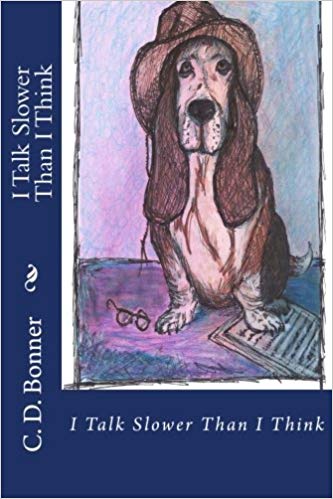
His upcoming projects include recording two audio albums of his original humor, finishing a children’s book, and writing a new compilation of short stories.  Dean’s memoir collection I Talk Slower Than I Think, along with several later stories, are under development by Council Tree Productions as a television series with a working title Tar Nation.

Dean serves as a board member (Historian) of the Alabama Writers’ Conclave, the nation’s oldest writers’ organization.  Bonner discovered author Rick Bragg’s books after he completed his own book, but easily identifies with the similar life experiences in Bragg’s work.  His partner in crime Patricia, a multi-talented artist, shares these same interests. Together, they travel and spend time at homes in Alabama and Virginia.

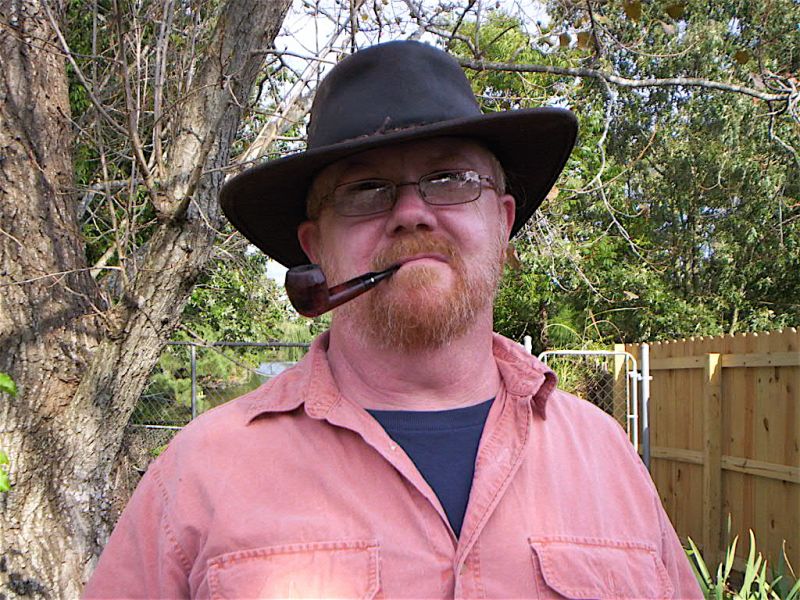
Clarence in Camp Hill at an earlier time.

Clarence in Camp Hill at an earlier time.

Guest User
The 14th Annual My Favorite Poem Reading.
41382174_1861182570631961_3228481196476334080_n.jpg

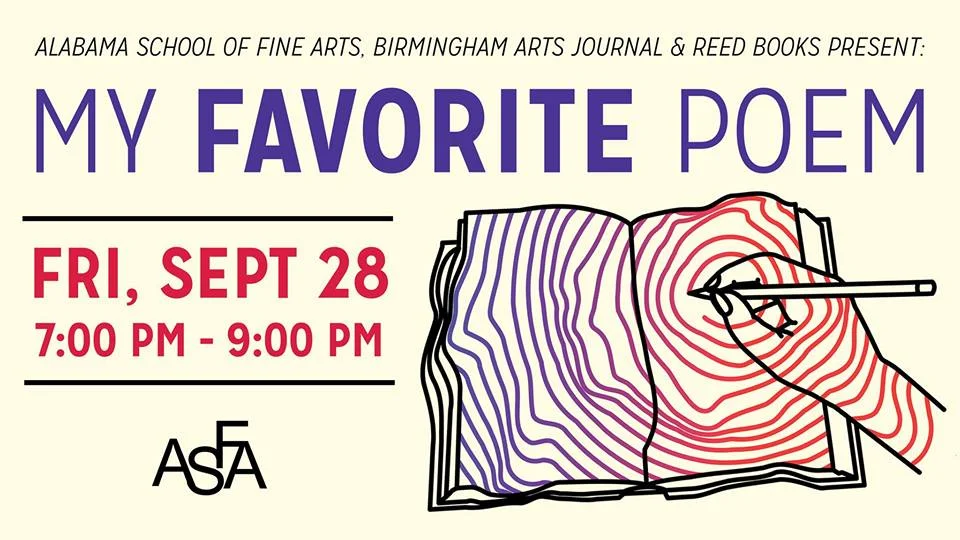
In partnership with the Birmingham Arts Journal and Reed Books, the ASFA Creative Writing Department will once again host the Birmingham area's My Favorite Poem event. 

My Favorite Poem invites poetry lovers from throughout central Alabama to share their favorite poems and to offer what they love about them. 

A reception, hosted by the parents of ASFA Creative Writing students will follow the reading. This event is free and open to the public.


Friday, September 28th at 7:00 pm
Alabama School of Fine Arts
Creative Writing Auditorium
Birmingham, AL

Rebuilding With Poetry

The Booker T Washington magnet school for the arts in Montgomery burned down last month. They lost much of their campus, the library, and a great deal of expensive Visual Arts and Media Arts equipment/supplies. They’ve been displaced to a dormant elementary school, and they’re trying to salvage this school year as they recover/rebuild for the future.

As a result, this year the My Favorite Poem team invited the BTW-CW students to join them at the annual reading event. Eleven students, three parents, and the chair of the Creative Writing Department, AWC’s very own Foster Dickson, will attend; two of their students will join the group of readers. There will be a Poem-on-Demand donation table in the lobby during the reception.

If you’d like to assist the students and teachers of Booker T Washington, you can donate online to the FAME Foundation for fire-related donations. But most direct way for folks in the Birmingham metro area to show their support – especially for the BTW writers -- is to attend the MFP event at ASFA later this month!

Guest User
"What's Old Is New": The Fitzgerald Museum Literary Contest
Image source: Atlas Obscura

Image source: Atlas Obscura

"What's Old Is New": The Fitzgerald Museum Contest

Every year, the F. Scott & Zelda Fitzgerald Museum hosts two annual writing competitions: Poetry & Short Story, in an effort to encourage writers of all ages to carry on the literary legacy of Scott & Zelda Fitzgerald. 

AWC member and author Foster Dickson, who serves on the board of the Fitzgerald Museum in Montgomery,  has been working with Executive Director Sarah Powell to bring the jazz onto the page for the Museum's Literary annual contest.  

2018 is the hundredth anniversary of Zelda and Scott Fitzgerald meeting in Montgomery. Rather than being a simple fiction or poetry contest, the Fitzgerald Museum Contest will seek out works that are genre-bending, multimedia, and otherwise unique.
— Foster Dickson

F. Scott and Zelda Sayre Fitzgerald were daring and revolutionary in their lives and in their art and writing. Today, one hundred years after the couple first met in Montgomery, Alabama, the Fitzgeralds’ literary and artistic works from the 1920s and 1930s are still regarded as groundbreaking, and The Fitzgerald Museum is seeking to identify and honor the daring and revolutionary young writers and artists of this generation.

Contest Guidelines:

The Fitzgerald Museum’s annual Literary Contest is seeking submissions of short fiction poetry, and multi-genre works, especially those works that break boundaries and defy tradition, that are highly original in style and scope, and that use literary and artistic techniques in innovative ways. Works with traditional forms and styles will be accepted, yet writers are encouraged to send works that utilize innovative forms and techniques. Literary works may include artwork, illustrations, font variations, and other graphic elements, with the caveat that these elements should enhance the work, not simply decorate the page.

Genres: Fiction, Poetry, Multi-Genre Categories

Grades 9–10, Grades 11–12, Undergraduate

Due to issues of compatibility, all works should be submitted electronically as PDFs to ensure that each submission appears as the author intends. PDF files should be named with the author’s first initial [dot] last name [underscore] title. For example, J.Smith_InnovativeStory.pdf. All submissions should be made using the form on the Fitzgerald Museum website. Each student may only enter once.

Submitted literary works will be judged in three separate age categories, so please be clear about that category. Prose submissions should not exceed 3,000 words. Poetry submissions should have 50 lines or fewer. Multi-genre works should not exceed ten pages. The submissions period is open from September 1 until December 1, 2018.

The Literary Contest will be judged by a panel of writers and artists. Award announcements will be made on March 15, 2019. In each age category, a single winner and honorable mentions will be named.

For more information, you can reach out to thefitzgeraldmuseum@gmail.com.

To learn more about the Museum and the role of the McPhillips family in its preservation, visit the  Encyclopedia of Alabama.

Guest User
Poet Lana K. Austin's first collection.
Poet Lana Austin

Poet Lana Austin

We are thrilled for AWC member Lana K. W. Austin, whose first full-length collection, Blood Harmony, officially comes out from Iris Press on September 3rd. I asked Lana about her first collection came together and she said:

I joyfully remember the story of how Blood Harmony's title poem, and really the catalyst for the entire book, came into being because it's a tale of how I was oh-so humbled and also magnificently encouraged at the same time.

I was in the senior honors seminar with Claudia Emerson at Mary Washington and I'd been writing history-centered poems about other people, some that'd even been lucky enough to garner awards and scholarships. I will always love narrative poems, especially if they delve into my home state of Kentucky and its iconic music or raw beauty.

But Claudia wanted more. 

"What about your history," she asked? 

I'd shied away from any "confessional" I-centered poems at that point, but as I started searching for my biological family and remembering my years in foster care singing with my half brother, I knew those memories were undoubtedly linked to the more narrative, biographical pieces on which I'd been focusing before. 

I stood humbled before Claudia then, cognizant of the fact that I'd been doing a very superficial surveying of the landscape of my home and my own life. 

She, however, saw it as a moment of epiphany, she with her eager and agile mind always seeking out new information, new visions of the old world. 

She encouraged me onward, which culminated in "Blood Harmony" the poem….which became the fulcrum of my MFA thesis at GMU and which, ten years later, has now become Blood Harmony the book. 

I'll never forget when I first brought that poem to Claudia and, honest to goodness, her face lit up. "You've found your voice!" Her expression and her words ignited me that day and they have every day since.

Here is a sample poem, "Blood Harmony," that first appeared in Columbia Journal in 2016 alongside two other poems from the new book.  

Blood Harmony

A single larynx halved,
             that’s how I perceived it

when I sang with my half
            brother--same mother, 

long gone. She is
            where it came from, 

our ability to blend,
             unique notes in a chord,

but still one voice. His tenor
             a ginger effervescence, 

and my aubergine alto
             painting what felt like

caverns-deep undertones
           in heavier hues,

our voices fused. Even
          in measures when one grew

more dominant on lead
           and the other receded, 

growing hybrid harmony, 
           a hymn shifting, 

we were rivulets divined
         from a vast river.

Creek, brook or stream--
          water from the same source.

Blood_Harmoy_front_cover[5].jpg


Advanced praise

"An ecclesiastical thread runs through this fine book, in that everything has its season, and everything—including joy and grief—goes together. Austin’s poems achieve through their own high and lonesome registers what we expect from the best blues or hillbilly music: the human experience in this weary world is affirmed, even dignified. I am glad these refreshing, bone- and blood-deep poems are in the world."

--Maurice Manning, author of One Man’s Dark, The Common Man, and Bucolics

Blood Harmony introduces a lively new voice to Appalachian poetry. Lana K. W. Austin celebrates the bonds of memory and blood in poems of both harmony and drama, remembering the blood spilled in the coalfields, and the struggles of families with loyalty and courage. The poems pay tribute to the place and soul of the region, the music of blending voices, adolescent desire, and the exuberance of motherhood, the enduring legacy of Jean Ritchie and Bill Monroe, and the mountains where the music was born.

—Robert Morgan,author of Dark Energy, Gap Creek, and Chasing the North Star

The great circle is unbroken in Lana Austin’s first full-length collection, Blood Harmony. The arc of mothering and hard unmothering, Kentucky floods and wanton drink, the luthier one with the carved grain and sorrowed ballads. In poems birthed from paradox, Austin’s fierce coupling of alto and effervescence infuses and uplifts family and community portraits and tributes to the high lonesome of her upbringing—Jean Ritchie, Bill Monroe, Emmylou Harris. Her own unshakable voice prevails amid the downbeat of wounded genealogy, love’s aching counterpoint and antidote to loss. So put your hands on the radio still warm and faintly glowing, scoot closer to hear Austin’s “damned salvation of sound.” The circle thrums as it bends toward that stubbornly joyful noise, the chord so deep and alive within us.

—Linda Parsons,author of Mother Land and This Shaky Earth

Walt Whitman once advised young poets to “Be outrageous! Be outrageous! But not too damned outrageous.” Lana Austin’s Blood Harmony has exactly that balance of old and new, of the immediate and the distant, of challenge and embrace. Her Kentucky landscape shows as familiar as a family heirloom and the music of her poems is as clear as a harpsichord in a meadow. This first collection reminds us how the soul is always seeking, in its dream of place, the final character of one’s identity, one’s home. The Gospel says abide and these poems are enactments with bold, electric, convincing authority. Lana Austin’s is a new country music worthy of a great readership. Let it be.

—Dave Smith,author of Little Boats, Unsalvaged, The Wick of Memory: New and Selected Poems,
and Hunting Men: Reflections on a Life in American Poetry

Attentive to history, place, pitch and character, the poems of Lana Austin’s Blood Harmony find bonds in music that dovetail with chords in family and community. Her lovely and passionate verses interweave precise knowledge of traditional mountain and CW music with marvelous invention which renders a mandolin “an amulet of sound” and describes listeners to Emmylou Harris as “embered… into incandescence.” These poems are handmade and heart-carved with a luthier’s canny expertise. Anyone wishing to go, as her opening poem invites, “In Search of the Wild Dulcimer,” need look no farther than this collection where kindred sounds blend beyond description. In thrall to depths of the spirit, her poems are also sweetly free. Blood Harmony will make you sigh and sob, clap and stomp.

—R. T. Smith, recipient of the 2014 Weinstein Prize in Poetry and author of Outlaw Style


About the Poet

Lana K. W. Austin’s poems and short stories have recently been featured in Mid-American Review, Sou’wester, The Chariton Review, Columbia Journal, Zone 3, Appalachian Heritage, The Pinch, The New Guard, Switchback, Bloodroot, Pine Mountain Sand & Gravel, and others. Austin has been a finalist and semi-finalist in numerous competitions, including the James Wright Poetry Award, the Crab Orchard Review First Book Award, the Zone 3 Book Award, the American Short Fiction Award, and the Machigonne Fiction Award. Born and raised in rural Kentucky, Austin studied creative writing at both Hollins University and the University of Mary Washington as an undergraduate and has an MFA from George Mason University (2008). Her first full-length poetry collection, Blood Harmony, is from Iris Press (2018) and her chapbook, In Search of the Wild Dulcimer, is from Finishing Line Press (2016). Austin has lived in England, Italy, and Washington, DC, but currently resides in Alabama, where she is an adjunct instructor in the English department at the University of Alabama in Huntsville. Also a journalist, Austin has written for numerous newspapers and magazines. For more information, visit her website

Guest User