newsback.jpg

Blog

What’s happening in the Alabama writing world…

The Dynamics of Science and Nature Writing for Fiction and Nonfiction Virtual Workshop

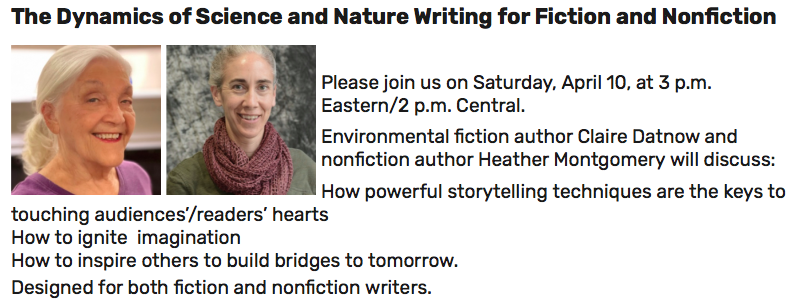
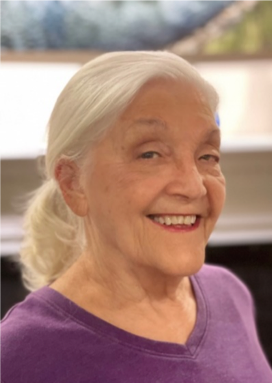
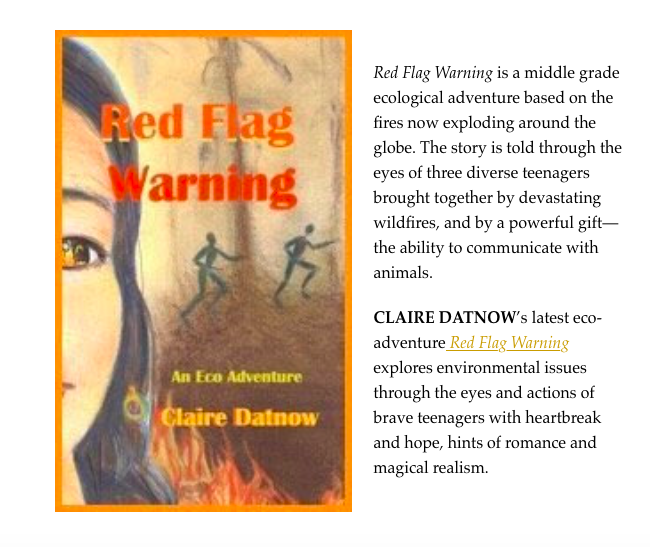
Please join us on Saturday, April 10, at 3 p.m. Eastern/2 p.m. Central. Environmental fiction author Claire Datnow and nonfiction author Heather Montgomery will discuss: How powerful storytelling techniques are the keys to touching readers’ hearts, to ignite their imagination, and inspire them to build bridges to tomorrow. Designed for both fiction and nonfiction writers

Claire Datnow was born and raised In Johannesburg, South Africa. Her family originated from Linkuva, Lithuania. Claire taught creative writing to gifted and talented students in the Birmingham Public Schools. She earned an MA in Education for Gifted and a second MA in Public History. Her books for middle schoolers include The Adventures of the Sizzling Six, an eco-mystery series, and Edwin Hubble, Discoverer of Galaxies. Her books for adults include a memoir, Behind The Walled Garden of Apartheid and The Nine Inheritors. Claire has received numerous scholarships and awards, including the Alabama Conservancy Blanche Dean Award for Outstanding Nature Educator, a Beeson Samford Writing Project Fellowship, a Fulbright Memorial Fund Teacher Scholarship, and Birmingham Public School Teacher of the Year. She enjoys visiting schools to inspire students to write their own eco-mystery stories, to become wise stewards of the earth, and to take action in their own communities. Claire serves Southern Breeze as a local liaison. 

Heather Montgomery writes for kids who are wild about animals. Her subjects range from snake lungs to snail tongues. Heather’s 16 nonfiction books include: Bugs Don’t Hug: Six-Legged Parents and Their Kids (Charlesbridge),Who Gives a Poop? Surprising Science from One End to the Other (Bloomsbury), and Something Rotten: A Fresh Look at Roadkill (Bloomsbury), which is an NCTE Orbis Pictus Recommended Book, a Junior Library Guild Selection, and a VOYA Nonfiction Honor Award Winner. Heather is a long-time volunteer with Southern Breeze and currently serves as our PAL liaison. 

 Both Claire and Heather are mentors for the Southern Breeze Mentorship Program! Thanks to Local Liaison Stephanie Moody for hosting this event. 

**The event is free, but registration is required. To register, please complete this form: Event Registration Form

Guest User
A sure cure for rejection: Writing advice from Judy DiGregorio
Guest blogger and AWC member, Judy DiGregorio.

Guest blogger and AWC member, Judy DiGregorio.

Get mad, then get published

Anger erupted in me like hot lava when an editor met with me to critique my manuscript at a writing conference. His insensitive comments irritated me so much that I fled home after the session, sat down at my computer, and literally pounded the keyboard as I began to flesh out an article rebutting each thing he said.   My fragile ego couldn’t handle honest feedback. 

 I wanted to be petted and stroked like my calico cat.  I wanted to be tickled under the chin.  Instead, the editor had informed me, in effect, that my writing had fleas. To work through my anger and frustration, I wrote an article about the experience called “Feedback: Who Needs It?” In the article, I addressed each criticism and suggestion the editor had offered during my evaluation.  

After I cooled down, I realized the suggestions he offered me were invaluable.  They were specific. They were accurate.  They were true. I needed to hear them.    

After several rejections, I successfully sold the article to Inscriptions, the e-zine for professional writers.  Then I sent a copy of it to the editor, thanking him for the suggestions that had enabled me to publish the article.  I was still a beginning writer, but I had already learned one lesson.  Accept criticism gracefully and learn from it.  I wanted to be the best writer I could be, but I could not improve without help. 

I continued writing and submitting my work. During a particularly frustrating period, I received 27 rejection letters in a row.  Finally, I received a handwritten note scribbled on the bottom of a form letter from an editor at Field and Stream.  The note chastised me for not paying more attention to the magazine guidelines. 

Under the note, the editor had scrawled a word that electrified me -- “Retry.”   This editor obviously recognized my talent, even if she didn’t accept this particular piece. I kissed the letter reverently and stuffed it into my pocket.  In my excitement, I pulled it out to read and reread. 

 Unfortunately, when I scanned the letter again the next day, I made a startling discovery.  The scribbled word at the bottom of the page matched the signature block on the letter. It didn’t say ‘Retry.’  It said ‘Betsy,’ the editor’s first name.  In my desperation to be published, I had misread the editor’s handwritten signature.  My hopes of fame and fortune popped quicker than a balloon.

 Back to the computer I crawled.  I wrote an article detailing the experience entitled “Desperately Seeking Publication.”   After several more rejections, I finally sold this article to Inkspot, another online publication for writers.  Unfortunately, Inkspot folded before publishing it so I resold the article to The Writing Parent .

After publishing several articles in regional and local magazines, I lobbied the editor of our local paper to give me a humor column.  I informed him that I was dependable, funny, and cheap.  He didn’t care.  I left him sample columns and persisted in visiting him every three months.  After nine months, he finally gave me a column -- to stop my visits, I guess.  Unfortunately, he took another job after my column appeared four times.   The interim editor cut back on local columnists so I was once more columnless.  

When a new editor finally started work, I employed the same strategy I had with the first editor. Again, I had to wait almost a year.  This time the editor offered me a humor column in the newspaper’s supplementary publication, Senior Living magazine.  I accepted at once and am still writing for it. The pay is low, but the exposure is high. The magazine is distributed in hospitals, fitness centers, credit unions, and hotels. Writing for Senior Living has given me a great deal of visibility and added to my writing credentials.  

I’ve learned quite a bit since that first painful writing critique several years ago. I’ve learned to handle rejection and accept criticism.  I’m a woman of small talents and big feet.  Yet, I’ve learned that patience and persistence enable me to successfully publish in a variety of newspapers, magazines, and anthologies. You can do it, too. 

Just be patient, be persistent, and be published! #  

JUST START

Stop procrastinating and start writing.  Grab a pencil and paper or sit down at your computer.  Write something.   Write anything.  Write a letter to your husband, your mother, or your doctor.   Keep a small notebook with you and jot down any ideas that occur to you during your daily routine.  Ideas are like bubbles so capture them quickly before they pop.

Take a writing class on the Internet or at a local college. Try to become the best writer you can be.  Join a local writers’ group.  Attend a writing conference.

Accept that you will have to make sacrifices to find time to write.   Most of us work full time and write in our spare time.  Turn off the television and turn on your brain.  Cultivate this habit.

Review and revise your work after the first draft.  Wait several days or weeks before doing it.  What sounded like Shakespeare when you initially wrote it may now sound like gibberish.  

Touch someone with your writing.  Nothing will give you more encouragement than hearing the words, “I loved your article.”  Polish and perfect your work before you submit it.  Writing takes both skill and determination. All you have to do is start!


Judy DiGregorio is recognized as a Woman of Distinction in the Arts by the YWCA. She is also a Distinguished Alumna of New Mexico Highlands University. She has published hundreds of columns and essays in The Writer, Army-Navy Times, New Millennium Writings, the Chicken Soup books, and numerous anthologies and has worked as a humor columnist for Anderson County Visions Magazine, Senior Living andEvaMag. Judy's collection of humorous essays, Life Among the Lilliputians from Celtic Cat Publishing , was featured at the 2009 Southern Festival of Books in Nashville. She also participated in the 2010 Southern Festival with her second book, Memories of a Loose WomanCeltic Cat Publishing also released a CD, Jest Judy, read by the author and available on itunes, and also published her third humor book, Tidbits, in the summer of 2015. 

Judy has served on the Playhouse Board of Directors where she frequently performs on stage and has prepared over 100 press releases. She has been featured on Channel 10 “Your Stories” by Abby Ham, on Live at Five, and on WDVX Tennessee Shines Radio several times. Judy has spoken at the UT Writers in the Library Series, Oak Ridge National Laboratory, the Y-12 National Security Complex, as well as numerous writing conferences and festivals including the Tennessee Mountain Writers’ Conference in Oak Ridge, Alabama Writers’ Cooperative, and Chattanooga Writers Conference. In her spare time, Judy hangs out with her first (and last) husband and writes light verse and humorous essays, sings with the St. Stephen’s Episcopal Church Choir, performs Sephardic Hispanic music with Vera Maya, and cuddles her great granddaughter.

Guest User
The Winds of Change: Children’s Environmental Climate Fiction

by Claire Datnow

The gale force winds of climate change are calling. They’re calling to scientists, writers, and artists to weave stories that will inspire the children of tomorrow to dream up a brighter future. Happily, many are responding to that call with a spate of new nature and environmental narratives which use science as a springboard to create powerful children’s literature. After decades of misinformation, denial, and inadequate attempts to reduce the dire impact of climate change young people around the world are troubled, angry, and frustrated. They are searching for ways to understand and to take action. 

Compelling narratives interwoven with science can entertain, educate, inspire, and empower them. I am certain that young people studying the natural sciences from kindergarten to college will bloom into the next generation of environmental leaders. They will understand the science and the issues underpinning society’s challenging ecological problems. And they will apply their knowledge to create a stronger connection between what must be done and how to get things done. Still, we need something more to close that chasm between cognition and action. We need something to electrify us, move us, spur us on, to stop us in our tracks. 

Science and literature can cross-fertilize one another. Storytellers need to understand the powerful methods of science that provide solutions to pressing problems, and scientists need to apply the building blocks of powerful writing to become better communicators. For me, the books I will write will always be grounded in science. Telling a moving story about climate change does not mean making up facts—we have enough of that already—the basis of the narrative has to be the truth and reality of climate change. As storytellers we hold the keys to touching our readers' hearts, to ignite their imagination to build a bridge to tomorrow, and empower them to take action for the greater good of humanity and the wellbeing of the Earth. We need to reject narratives of division. We need storytellers from all disciplines to blur boundaries, expand empathy, and stretch our capacity for caring. The winds of change are calling loud and clear for narratives that will illuminate our vital connection to one another and to this precious blue planet on which all life depends. 

Claire Datnow was born and raised in Johannesburg, South Africa, which ignited her love for the natural world and for indigenous cultures. Her published works include a middle grade Eco mystery series. She taught gifted and talented students creative writing and ecology. Together with her students she founded a nature trail, now named in her honor, the Alabama Audubon-Datnow Forest Preserve. She would love for you to read her memoir, BEHIND THE WALLED GARDEN OF APARTHEID .

Resources on Environmental Literature for Parents & Educators

 The books range from mysteries to thrillers, yet they all share strong environmental themes.

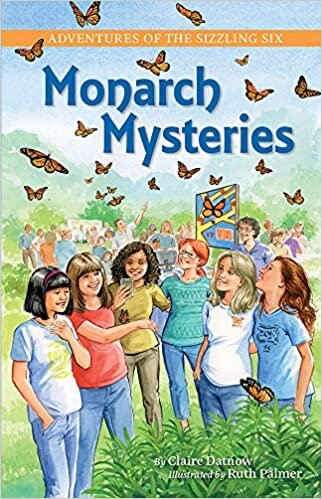
The Adventures of the Sizzling Six Eco mystery series by Claire Datnow.

Blogs on Environmental Fiction and a list of books (upper elementary and middle grades) 

Environmental Novels in Juvenile and Young Adult Fiction

Chapter Books to Inspire Young Environmental Advocates


Guest User
A conversation with NEA Arts Fellow in Poetry, Lauren Slaughter
lauren-slaughter-author-5.jpg

Alina Stefanescu got the chance to chat with Birmingham writer, Lauren Slaughter, about life in pandemic. In the meantime, she won an NEA Arts Fellowship—and we celebrate her writing, work, and life here.

I want to begin by thanking you for this opportunity to talk about writing and life. The first time I heard the name Lauren Slaughter, it was firmly attached to the word poet. But in the last year, you've published some incredible essays and fiction. I'd love to know more about the context that created those pieces. Has your identity as a poet shifted into something broader, or do you (like some) still primarily approach the page as a poet who may also write prose? Why or why not?

Thank you so much for the invitation! And thank you, too, for your kind words about my prose writing recently. It’s funny, but I think that I’ve mostly returned to prose (my first love, as a writer) for rather pragmatic reasons. For a long time, especially when my children were younger, I’m not sure I could process or deal with more text than I could lay out on my counter in a page or two. I could print it out, and walk by on my laps through the house, and etch in an edit here or there. I could see the whole thing. It’s certainly not easier to write poetry than it is to write prose, but during this pandemic, I’ve noticed that I have only been able to write poetry and I think it’s for similar reasons. 

I’ve also had the experience of writing about a subject in poetry and then feeling like it needed a lot more physical space and exploration than I was able to give it on the first go, and in the I-centered lyric (my poems are hopelessly I-centered--I’m working on it). For example, I rather feverishly wrote a poem responding to the 2017 bomb threats to Jewish Community Centers when they occurred because my daughter attended one of the local centers for daycare at the time. The parents I know found the experience quite traumatic--the bomb threats kept occurring, we kept having to send our children to school because what else could one do? There was work to get to and the threats seemed to be empty ones. It was awful and eye-opening about the hate in this country--everywhere. I knew that I had a lot more writing to do to examine what happened. More recently, I was able to write that story

And to your question regarding whether or not I approach the page as a poet or prose-writer? I came to poetry rather late--or, at least it used to feel that way--so I spent a lot of energy feeling like a prose-writer masquerading as a poet. Then, getting back into writing prose after a rather long break, I felt like a poet pretending she could write stories. I couldn’t win! So, now I guess I’m working on trying to use the form that works with the kind of exploration I want to do on a subject. Or, maybe it’s not that deliberate and I’m mostly just winging it. Yeah, that’s probably more like it. 


Winging it sounds familiar and necessary, especially during this time of international pandemic. How has your writing process been affected, if at all, by the pandemic? How are you managing having kids at home while also editing, teaching, and trying to bring words to the page?  

Gosh, I think the pandemic is having a profound effect on anybody who is writing right now. I have some writer friends who are absolutely pouring work onto the page (even ones with kids and jobs!) and I also know so many writers whose impulse to create is just not happening right now. Or, they want to write but other responsibilities are keeping them from it. I can relate to all of it. I’ve written exactly four poems in the past--what, 100 days?--and each of them was composed with a kind of fury I usually only experience once a year (if that). So, I guess right now you could say that I’m either obsessively writing or binge-watching Schitt’s Creek or chasing the kids. No inbetween exists. 


Schitt's Creek is the gift that keeps on giving. I agree that the in-between is an amorphous gray zone I wish I could imagine inhabiting. A little cardinal mentioned something about a new poetry collection on the horizon--which is so exciting. Can you tell us a little bit about it? Okay, nevermind, can you tell us a lot about it?

The book is called, Spectacle, and in many ways it is an exploration of how we are shaped by the way women, in particular, are seen--it is something we either embrace or reject. I thought a lot about my daughter, mother, and sister as I wrote the book, and they each find their way into the poems in different ways. I’d describe the project as explicitly feminist, in that it both criticizes—and, occasionally, celebrates—the ways a woman’s body is seen and experienced as a kind of curiosity--something for display. Also, I zoom out in a number of poems to consider how this motif can be explored in the media and art. I look particularly at the work of Dutch portrait photographer, Rineke Dijkstra, whose work I encountered on a trip to the Guggenheim about five years ago.  Her photographs are so arresting to me, so powerful, because she seems to capture her subjects in their most vulnerable moments. When I read my Dijkstra poems, I often say that her portraits are the anti-profile pic or the selfie you would like if it didn’t look so much like you--so you delete it. 

Also related to the central theme and title are poems that look at contemporary American culture and so many spectacles of violence, such as the Pulse nightclub shooting and, again, those bomb threats made to Jewish Community Centers. A few new poems related to the pandemic will probably also make their way into the book before final edits. 


The phrase "spectacles of violence" stood out. Walter Benjamin and others came to mind. I was wondering if any other writers informed your work in this new collection, particularly any essayists or memoir or nonfiction writers. If so, how? If not, what part of the literary landscape influenced your recent work?

Yes, thank you. I think I engage with violence in many ways in the book; violence perpetuated against women particularly, but also toward and within our American culture right now. My previous collection of poems, a lesson in smallness, was published in 2015, so most of the poems in this new book were written during the Trump presidency. And he’s all spectacle, of course-- nothing but! I was surely writing some of these poems in response to a president who brags about grabbing “pussy.” 

I’ve always gravitated most to women writers, but I think even more so during the writing of this book, a book about the woman’s body as made and inherited spectacle. I often read the way I eat; by constantly adjusting to get just the right balance on the plate. It’s a bit spastic in reality, as I’m reading bits of this and that, forgetting to finish one book before picking up another. I spent the most time these past years with Anne Carson, Wislawa Szymborska, C.D. Wright, Rae Armantrout, Marie Howe, Erin Belieu, Louise Gluck, Grace Paley, Dickinson. Jane Hirshfield and Zadie Smith’s essays, and Rebbeca Traister who writes on the value and importance of female rage. And, of course, there are the Dijkstra photographs. 


It feels like our relationships to words change over time as those words thicken or connote more? Has parenting changed or modified or sharpened the meaning of certain words for you? What words in particular shaped your forthcoming collection--and how did these words alter the formal dynamics or constraints you set for yourself?

This is an amazing question. 

Yes, I think parenting has adjusted my relationship to language in general. I am--or, I try very hard to be--aware and deliberate about the words I use with my children and one of my greatest joys is teaching my children new words (though I’m met with eye rolls sometimes now that they are older). Those moments where I lose control of my words due to frustration or tiredness are the moments I hope don’t stand out in the minds of my children when they grow up. They stand out to me, though. 

I do think this appreciation of language and the power of it has found its way into my work. I wrote the collection without a title in mind and it was when I began to words like: beholding, dilation, scrutiny, shines, mirror, invisible, eruption, muted, blooming, fluorescence, and, of course, spectacle that I started to see clearly the themes of the book I’d been writing. 


Muted and blooming, I love imagining those juxtapostions. Some poets have mentioned spending more time listening rather than reading during this pandemic. Have you found any podcasts or music that keeps returning to enter your work? Does Spectacle have any musical influence? Also I would love to know more about your experience as a librettist. 

I can relate. For me, and I suppose I’m not alone, it has been hard to concentrate sometimes. Also hard to sit. I admit loving to listen to audiobooks--it’s calming to have someone read me a story. Most recently I listened to Memorial Drive by Natasha Tretheway, who is also the reader. Her voice is one of my favorite poet’s voices and through the story she tells is terrible, and yet it occurs in the poet’s rhythms and language and is full of profoundly beautiful moments. Though I do listen way too much to NPR I’ve been trying to counter that with books, music (old favorites, like Bjork) and poetry podcasts like, The Slowdown. 

Thanks for asking about  my experience as a librettist. It was incredible and I would love to do it again. Maxwell Dulaney, a professor of composition and theory at Tulane, was in the beginning stages of composing  an opera about the Eurydice myth and he asked me to come on board to write the libretto. He felt it was important for a woman to write the libretto, as the opera was to be about the experience of Eurydice and not the experience of Orpheus, which is the way the story is traditionally told. I loved imagining this world and collaborating with Max. It was a totally different way of writing and sometimes there was a steep learning curve. Mostly, I had to be prepared to cut, let go, and not become too attached to the language I had chosen because much of it had to be rearranged to fit the score. Selections from the opera, Already Root, were performed in New York in 2018 and I will never forget the beautiful soprano serenading the audience with my words. Chills! 

That sounds like something worthy of a love tweet. By which I mean this endless poem called "Love" that Alex Dimitrov has created on twitter, a sort of new form adapted from a poem originally published in American Poetry Review, and continued in real time with one tweet a day. For the fun of it--and because pandemic demands new forms in both interviews and life--I would love to hear what you love. Using "I love" as an anaphora. What ten things do you love today, Lauren?

I love the light between the trees

and dear old friends as old as me.

My cat that died, his inside purr.

I love my husband’s brillo beard.

I love to sleep outside with owls

and between my wormy children.

I love the words I couldn’t write,

the secret sound of someone else.

And I love you. And after this. 

And wedding cake. A big fat slice.


I love this so much--you just brought poetry into the wreck of my room, and I am so grateful. I can't wait to read Spectacle. I can't wait for this pandemic to end. On that note, I'd love to share any recent craft resources you've discovered or created that might help poets and writers who hope to smuggle some writing-time into the holiday season.

Aw, thanks. Thank you so much for interviewing me and for everything Alabama Writers’ Forum does to support writers in the state. I know it is a labor of love, and I’m so grateful to be part of this community. 

As for resources, the fantastic online journal, Pigeonholes, has a wonderful free feature, Lessons from a Distance, that offers generative exercises and tutorials. I was happy to share a favorite exercise of mine there recently. Otherwise, what I love most is to put on my earbuds and lose myself in one of the many fantastic poetry podcasts available these days while I chop onions or clean up after the kids or take care of some other domestic minutia. It’s a great escape and always leaves me energized. The Slowdown and The New Yorker: Poetry and current favorites. 


Lauren Slaughter is the recipient of a Rona Jaffe Foundation Writers’ Award and author of the poetry collection, a lesson in smallness. Her poems, essays, and short stories appear or are forthcoming in Image, RHINO, Pleiades, Kenyon Review Online, New South, The Journal, and 32 Poems, among many other places. She is an assistant professor of English at The University of Alabama at Birmingham where she is also Editor-in-Chief of NELLE, a literary journal that publishes writing by women.
Guest User
2020 AWC Writing Contest Winners.

Congratulations to all the winners and to those who entered our annual writing contest! We are grateful to our judges, who served in volunteer capacity during a pandemic time without any financial renumeration. May 2021 bring us closer as a community, and may we begin by celebrating some Alabama winners!

2020 AWC Writing Contest Winners

1st Chapter of a Novel


First Prize: “Millie’s Razor” by Dave Hammond

Second Prize: “O’Banion’s Bluff” by Whitney Adrienne Snow

Third Prize: “A Small Town Guide to Re-Inventing Yourself” by Christopher Jay Jones

Flash Fiction

First Prize: “A View from the Precipice"” by Dave Hammond

Second Prize: “The Most Precious Item” by Vic Kerry

Third Prize: “Reruns” by Larry Wilson

Memoir

First Prize: “A Rusty Piece of Tin” by Daniel Leonard

Second Prize: “The Fall of a Septuagenarian Cyclist” by Jeff Grill

Formal Poetry

First Prize: “How Love Wins” by Jeanette Willert

Second Prize: “Livin’ with Peace” by Jeral Williams

Third Prize: “What Are You Doing Here (Gigan)” by Leonard Temme

Short Story

First Prize: “Moon River” by Doug Gray

Second Prize: “Collect” by Christopher Jay Jones

Third Prize: “The Missing Piece” by Lauren Foreggar

Free Form Poetry

First Prize: “Isabel Dances the Lace” by Gurupert Khalsa

Second Prize: “Transposing Ann Carson” by Catherine Hall Kiser

Third Prize: “Nursery Dreams” by Kathleen Duthu

Guest User
Holiday Books & Reading From Alabama Writers

It would be impossible to assemble a list of all the incredible books by Alabama writers that deserve your attention, but, in the interest of serving the good at the expense of the perfect, what follows is an incomplete list, a glimpse.

Recipient of the 2014 Writers Exchange Award from Poets & WritersHarry Moore taught writing and literature for four decades in Alabama community colleges. He lives with his wife, Cassandra, in Decatur, Alabama, and currently serves as an assistant editor of POEM magazine, His poems have appeared or are forthcoming in the Sow’s Ear Poetry ReviewAvocetPudding MagazineMain Street RagSouth Carolina Review, Anglican Theological ReviewXavier Review, and other journals. In his latest chapbook, Beyond Paradise (Main Street Rag, 2020), Moore uses sound as a vehicle into space and life. Jake Berry calls the language and beauty of this book “an unweeded paradise.”

Bruce Berger, the author, finally came home 50 years after the Vietnam war when his memories crystallized into the 34 poems in Fragments. He shipped to Vietnam as an Infantryman in 1970 but was assigned most of the year to the Casualty Branch of the 101st Airborne Division at Camp Eagle, near Phu Bai. As “next-of-kin” editor, he wrote hundreds of sympathy letters to grieving families back home for loss of their soldier, and sometimes helped gather fallen brothers on battle grounds to begin their long journeys home. Writing these poems brought him home. Many of the poems are illustrated with artwork created by members of the Providence Art Club in Rhode Island. All earnings from this book will be donated to the Vietnam Veterans of America.


And a few more books, some of which we’ve featured in the recent past, that make great gifts for friends and family—and, of course, yourself….

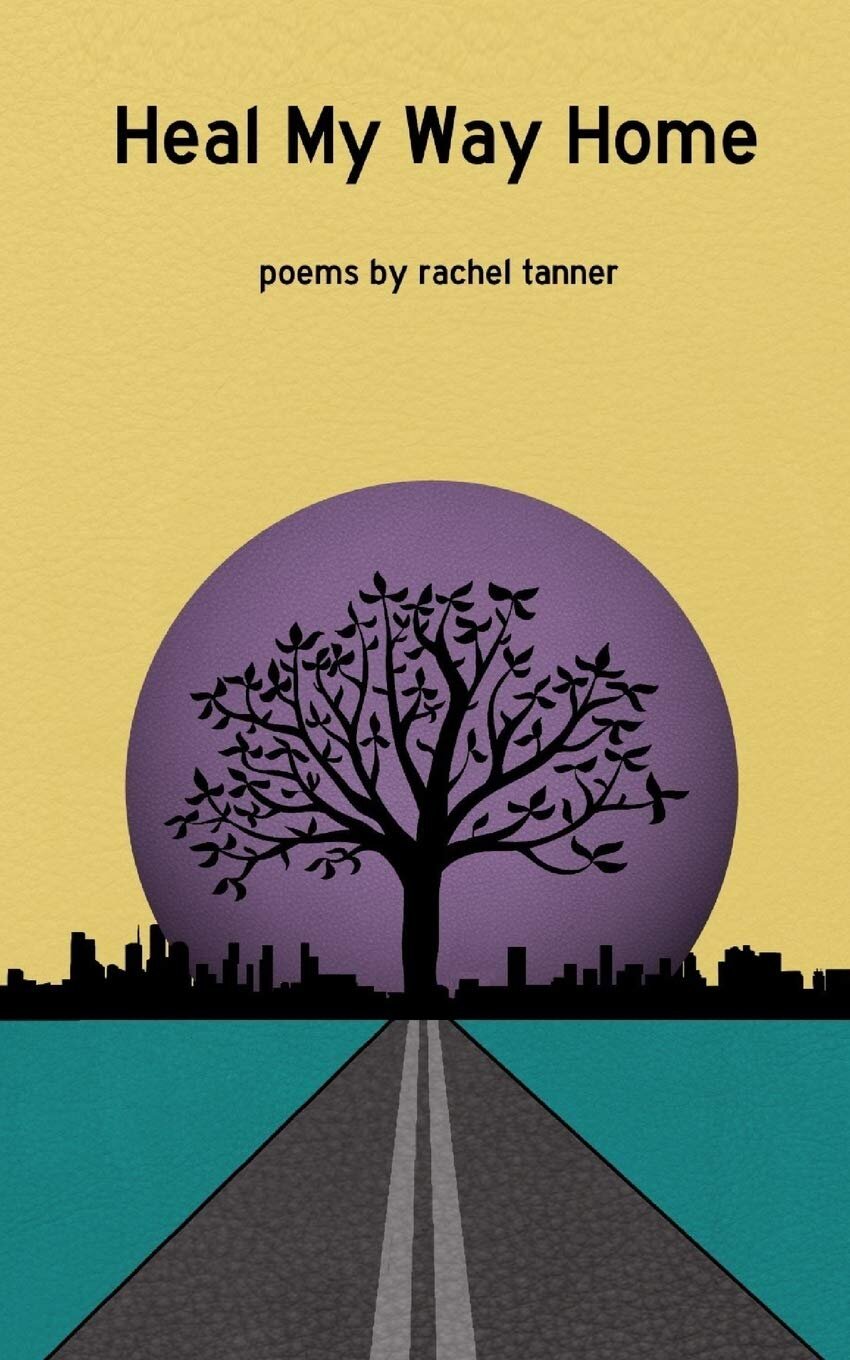
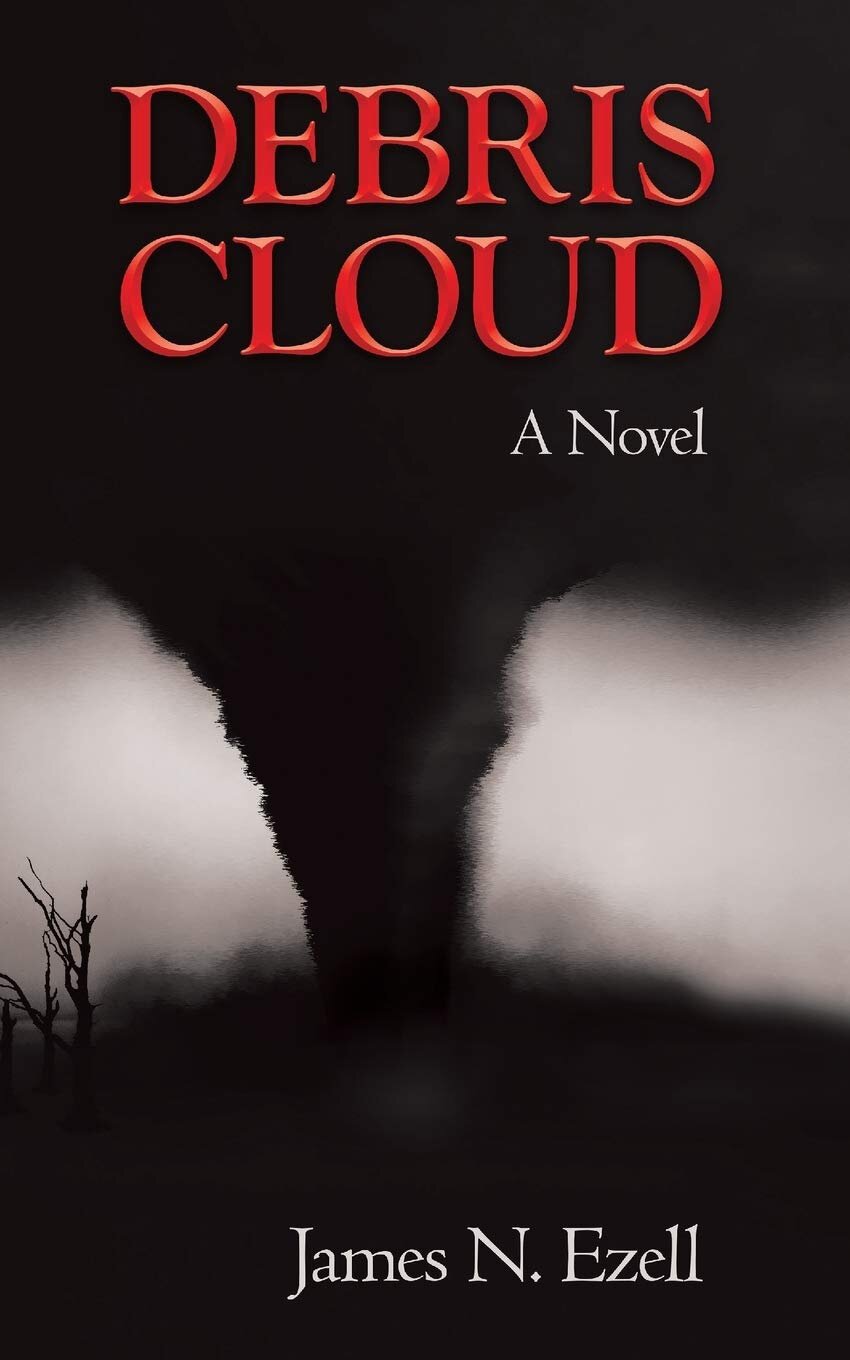
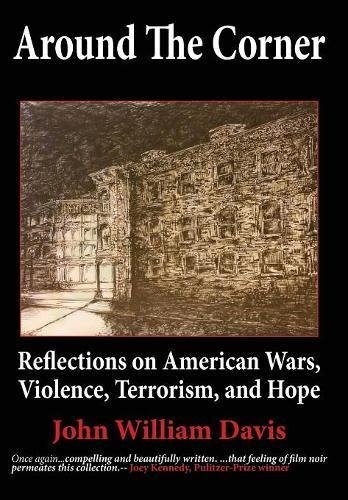
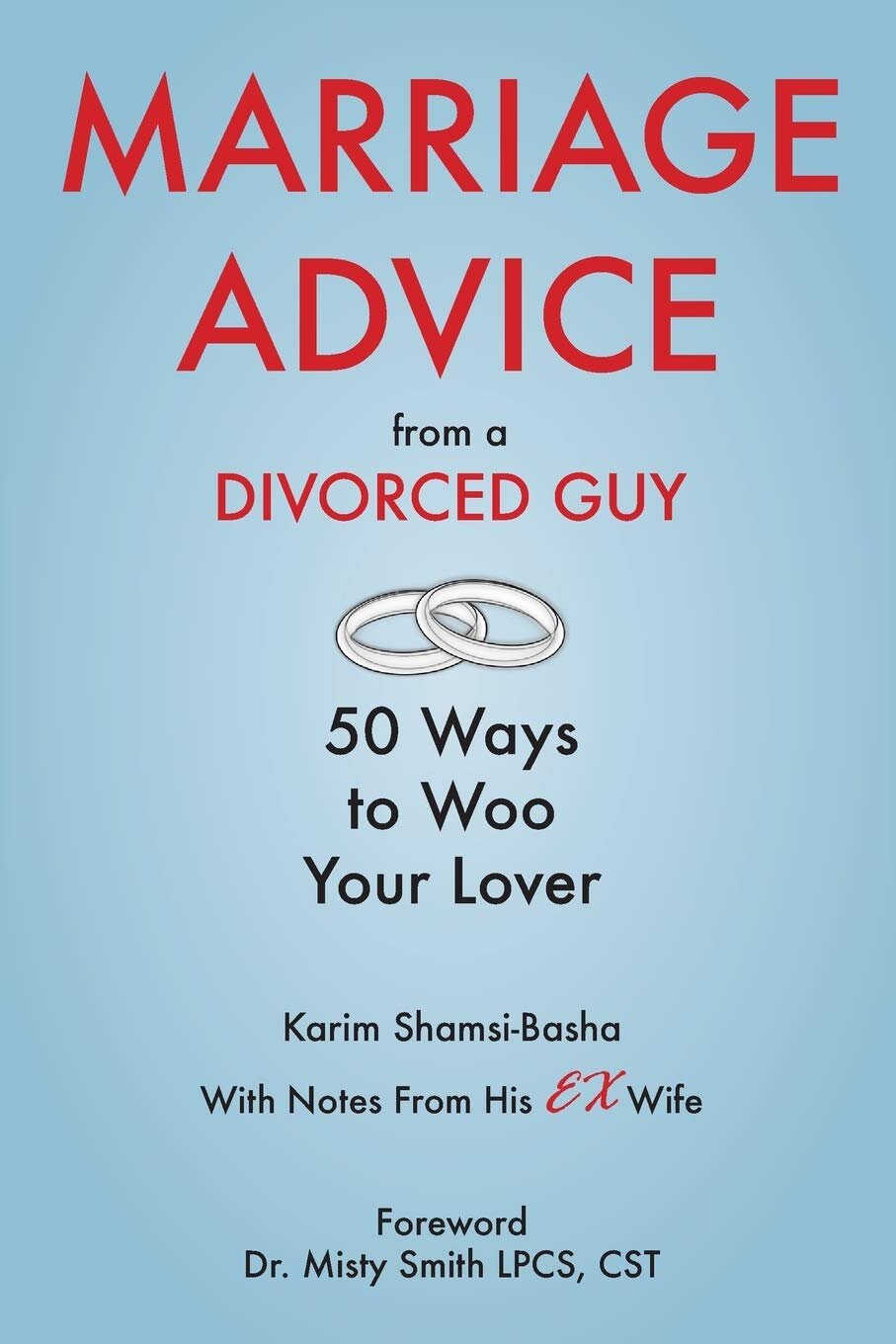
And don’t miss the huge selection of other books published by Alabama writers in recent years—everything from poetry to nonfiction to history to short story collections to anthologies…

Guest User
Alabama State Poet Laureate Nominations

2022 - 2025 Alabama Poet Laureate Nominations Guidelines 

Deadline for nominations: MARCH 15, 2021.

The Board has decided that, given the extenuating circumstances associated with the pandemic, we would like to extend the deadline for nominations for the next state Poet Laureate. The new deadline for receipt of nominations will be March 15. Queries, including information regarding electronic submission, can be sent to AWC President TJ Beitelman, who is serving as the selection process coordinator. His email address is tjbeitelman@asfa.k12.al.us.

What is the Alabama Poet Laureate Position?

The Alabama Poet Laureate recognizes and honors a citizen poet of exceptional talent and accomplishment. The Alabama Poet Laureate also encourages appreciation of poetry and literary life in Alabama. This position was created by the state legislature May 5, 1931.  

What is the Term of Service and Compensation?

The term of service is a four-year renewable term. The award is honorific; the state provides no compensation. The term begins January 1, 2022.  Currently, the position of Alabama State Poet Laureate is filled by Jennifer Horne of Cottondale, Alabama.

Who is eligible to be nominated Alabama Poet Laureate?

Any citizen of the state of Alabama may nominate a poet for the Poet Laureate position.  A poet may not self-nominate him or herself, and no award will be given posthumously.  Nominations for Alabama Poet Laureate will be accepted for Alabama poets who meet the following eligibility requirements:

  1. Must currently be a resident of Alabama and have resided in Alabama for at least ten years.

  2. Must be at least 21 years old.

  3. Must have at least one book of poetry published by a commercial or small press within the past ten years.

  4. Must be available to travel and give presentations.

  5. Must have produced work of the highest caliber and critical acclaim and have contributed substantial service to the development of the literary arts as demonstrated by the submitted application.

What is the selection process for Alabama Poet Laureate?

The President of Alabama Writers Conclave will appoint a Poet Laureate Nominations Committee who will review applications and present a candidate for election at the annual meeting on or about August 15, 2021. The Governor of the State of Alabama will then appoint the selected candidate in an official ceremony.

How will Alabama Poet Laureate nominations be evaluated?

  1. Excellence as evidenced by the submitted poetry sample.

  2. Exemplary professionalism as evidenced by an established history of substantial and significant publications in journals and books including at least one book of poems published by a commercial or small press (see eligibility requirements) and special honors, awards, fellowships, or other recognition.

  3. Advancement of poetry in Alabama communities as evidenced by an established history of activity in Alabama’s literary community through readings, publications, public presentations and/or teaching. 

To be considered, nominations must include the following:

  1. Completed nomination form (attached), signed by nominator and nominated poet that include a binding statement that the poetry sample is the nominee’s and the materials submitted are true and complete.

  2. A cover letter from the nominator of no more than two pages providing the following information: name and a short biography of the nominated poet and a summary of significant awards and published works.

  3. The poet-nominee’s resume or CV.

  4. A summary of no more than one page indicating (A) why the nominator considers the work of the nominated poet to be of the highest quality and (B) why the nominee is well-suited to help promote the reading, writing, and appreciation of poetry in our state.

  5. A work sample of no more than ten poems.  Submissions may not exceed 15 continuously numbered 8 1/2” x 11” pages (one side), no less than 12 point type.  Please provide copyright information where appropriate; all submissions become part of the public record. Both published and non-published poetry may be submitted. All submissions must be typewritten or computer generated.  Materials hand-written will not be accepted.


Receipt deadline for all nominations is MARCH 15, 2021.

To learn more about the laws and constitutional criteria governing the position of state poet laureate,
please download the document below.

Guest User
The Art of Painting the Past: A Craft Essay from T.K. Thorne
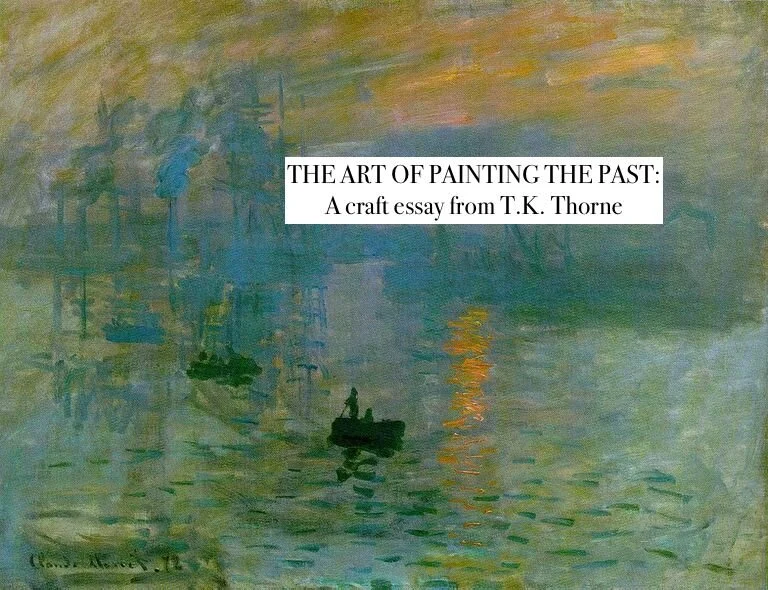
Sunrise, 1873. Oil on canvas by Claude Monet

Sunrise, 1873. Oil on canvas by Claude Monet

Painters employ color, light, and shadow. Writers use small, standardized black marks set against a white background. Yet these marks can inspire, condemn, evoke tears, laughter, anger, or regret. They can sweep a reader into a different reality, even bring a vanished time to life. What is the secret of their power?

All the elements of writing well and writing good fiction apply to writing the historical novel: characterization, voice, plot, theme, and solid research about the time period. But what makes a good historical novel—a novel that uncorks the magic of historical fiction, engrossing the reader in a story that transforms the past from a misty construct into something “real”?

To do that, there must be an authoritative voice that makes the characters and the historical setting believable and allows the reader to “suspend belief.” Part of establishing that voice is found in the advice to writers that characters in historical fiction need to think/speak/act as they would in the era we are writing about, as they are products of their time and upbringing. And we can aim for that. We can put effort into thinking about the words and phrases we use in order to avoid the anachronisms that pull a reader out of the story, and we can season the story with the spices of our careful research. But in reality, we can’t really accomplish it; it’s all anachronism—our very language is different from the language of the past in many ways.

Remember your high school Chaucer?

WHAN that Aprille with his shoures soote
The droghte of Marche hath perced to the rote,
And bathed every veyne is swich licour,
Of which vertu engendred is the flour:

Obviously, if you wrote a story in the real style of that time, it might be authentic, but who would, or could, read it? Structure can also be an issue. You might write a Moby Dick or Ivanhoe, but no modern day publisher (and very few readers) would put up with such meandering beginnings. The secret is to write a story structured in a way that is understandable and engaging to the modern reader yet creates an illusion of being an accurate reflection of the past.

Art, even a photograph, is a symbolic representation of what the artist wishes to communicate. It is the same for writers. Good dialogue, for example, is no more a true replication of how people speak to one another, than a brush stroke of green paint is actually grass. Well written dialogue is condensed, shaped, and structured to accomplish the writer’s goals—to reveal character, forward the plot, or build atmosphere. It creates the illusion of real dialogue. In the same vein, use of dialect can help create the illusion. Applied too thickly, however, even though it might be more accurate, it can bog down or confuse the reader. Even information—the historical novelist’s primary tool—must not overwhelm the story but enhance the suspension of belief.

How much is too much? There is not a definitive answer to that question. It is a matter of what works. M. T. Anderson pushed the envelope in incorporating the style of a time period in the structure of his language, writing of events in 1770’s in his novel, The Astonishing Life of Octavian Nothing:

 Some few months later, a mob assembled in Old South Meeting House, and, after a rousing word by Mr. Adams, some habited themselves as Mohawk Indians and repaired to the wharves where they dumped tea.

I did not hear of this charade until the next day and did not understand its purport; rather thinking it a pleasant interlude from the more brutal games of the Sons of Liberty. There was something almost gentlemanly about it, a hint of sport. Dr. Trefusis and I walked along the wharves and spake of disguise, color, substance, and the solidity of matter.

Far out in the harbor, tea clotted the brilliancy of sun upon the water. Men thin as insects rowed scows between the clumps, shepherding them with paddles, pressing down upon them, dousing them, drowning them, so that light might play unimpeded upon the winter sea.

In his notes, Anderson explained that he used selected words and phrasings to create the sense of the time period and style of writing but had to temper it significantly in order to make it understandable for the modern reader. I believe Anderson spent as much time studying the words and phrasing of writing in the 1700’s as he did historical facts. What he did was daring and not for beginners, but it worked beautifully.

On the other hand, my debut novel, Noah’s Wife, was set several thousand years in the past. No one knows what language was spoken in ancient Turkey in 5500 BCE. It was impossible to have “authentic” dialogue or duplicate the accurate structure of the language (writing having not been invented yet). Similarly, in Angels at the Gate—the story of Lot’s wife set in the time of Abraham—the spoken languages were a mixture of Akkadian, Egyptian, and Canaanite. Attempting anything like what Anderson did would have been ludicrous and would have had the opposite effect of the one intended.

In both books, avoiding the use of words or metaphors that would not have been part of the characters’ worlds and using slightly different sentence structures than those expected by the modern ear helped create the subtle illusion of an older time. And of course, utilizing information and extrapolations about the culture and environment of the time periods in a way that flowed naturally from the story deepened the illusion. From my novel Angels At The Gate:

 If the path of obedience is the path of wisdom, it is one not well worn by my feet. I am Adira, daughter of the caravan, daughter of the wind, and daughter of the famed merchant, Zakiti. That I am his daughter, not his son, is a secret between my father and myself. This is a fine arrangement, as I prefer the freedoms of being a boy.

At the head of our caravan, my father and I walk together beside our pack donkeys, the late day sun casting stubby shadows before us. Our sandaled feet raise a cloud of dust along the dry path that winds through Canaan’s white-and-taupe hills, studded with shrubs and spring flowers. We are taking a gift of sheep to our tribe’s elder, along with a portion of our recent purchase of olive oil and wine. I am less than enthusiastic.

Father sees this in my face. He reads me well—often, too well. “You are not happy to see Abram and Sarai?” he says, giving my donkey a pat. “Why not, Adir?” He always uses the masculine form of my name, even when we are alone. He is afraid if he does not, he will forget one day when he is angry or tired.

I shrug. “I am happy to visit with my cousin, Ishmael, but Abram is old and likes to talk.”

“He is a wise and learned man,” my father says, resting a hand on my shoulder. “You should listen to him.”

I should do many things I do not . . . .

The Impressionists often painted with thin brush lines that individually seem chaotic, but together (and at the right distance) transforms and suspends belief, so that the viewer “sees” what was intended. So too does the novelist, and the historical novelist does so with both the additional challenge and the additional tools of rich information about the past. It is all illusion, but then science tells us that what we think of as reality is also an illusion, a reconstruction created by our minds. This reconstructed “truth” of our perceptions is no less beautiful, tragic, or engaging . . . like a good story.


About the Author

T.K. Thorne’s childhood passion for storytelling deepened when she became a police officer. “It was a crash course in life, in what motivated people and what mattered to them.” She served more than two decades in the Birmingham police force where she worked in the patrol, detective, and administration bureaus, retiring as a precinct captain. Following that, she was executive director of CAP (City Action Partnership), a downtown business improvement district that focused on safety, retiring after seventeen years to write full time. Her writings roam wherever her interests and imagination take her, from award-winning historical fiction to civil rights nonfiction and urban fantasy where she mixes murder and mystery with a bit of magic. She writes from her mountaintop home northeast of Birmingham, often with a dog and a cat vying for her lap.


Guest User
Growing up in a library: An essay by Carolyn Rhodes.
Carolyn is a creative writer. She takes you places and to historic events while growing up living inside two New York Public Library apartments. It is a page turner from beginning to end. It is a true upbeat story that only a library girl could have experienced.
— Barbara Barker, Professor Emeritus, University of Alabama

About the Author

Carolyn Rhodes earned her B.A.in Dramatic Arts and Dance, College of Staten Island, New York City, 1973. She wrote, directed, and choreographed her first screenplay and performed in Lincoln Center. Carolyn maintained her dance skills and picked back up again after retirement from University of Alabama (UA) as an exercise instructor, Osher Lifelong Learning Institute (OLLI) on campus.  Her writing credits, (over one hundred essays, articles and reviews) Birmingham Arts Journal; The Executive, UA Alumni Magazine feature writer; Travel Editor, Prime LifeStyle of Alabama; Press Reporter, Consumer Electronics show(CES)reviewer of tech devices and products.  Carolyn maintains two blogs and a website for her book, www.librarygirlsofnewyork.com. She can be reached at writegems@gmail.com . Carolyn lives in Tuscaloosa, Alabama.


Library Girls of New York: How It Started

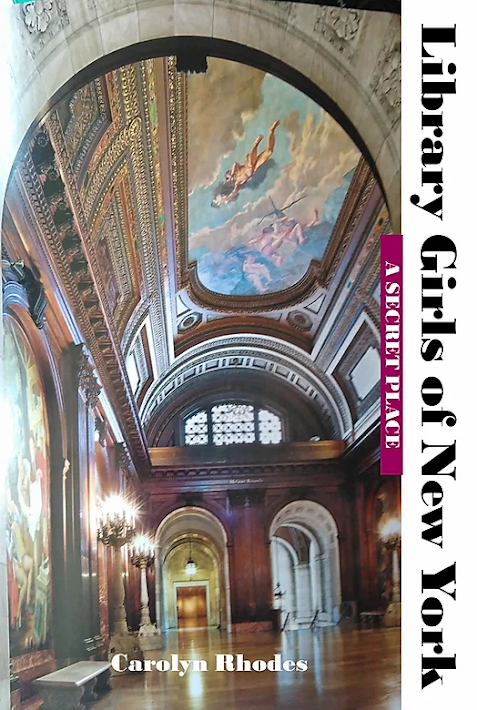
Library Girls of New York, A Secret Place by Carolyn Rhodes (Borgo Publishing, December 2019)

How did I get to live inside a New York Public Library? Library Girls of New York is a unique true story, a memoir rooted in the recollection of growing up in an unusual place, an Institution we all love and support.

From the 1930s to 1970s, my Dad, Joseph Mitchell was a custodian for three NYPL branches. I lived in an apartment in two of those branches – one in Manhattan’s lower east side, Tompkins Square Library, overlooking a park; the other one in Staten Island’s St. George regional branch where we had our own side entrance. 

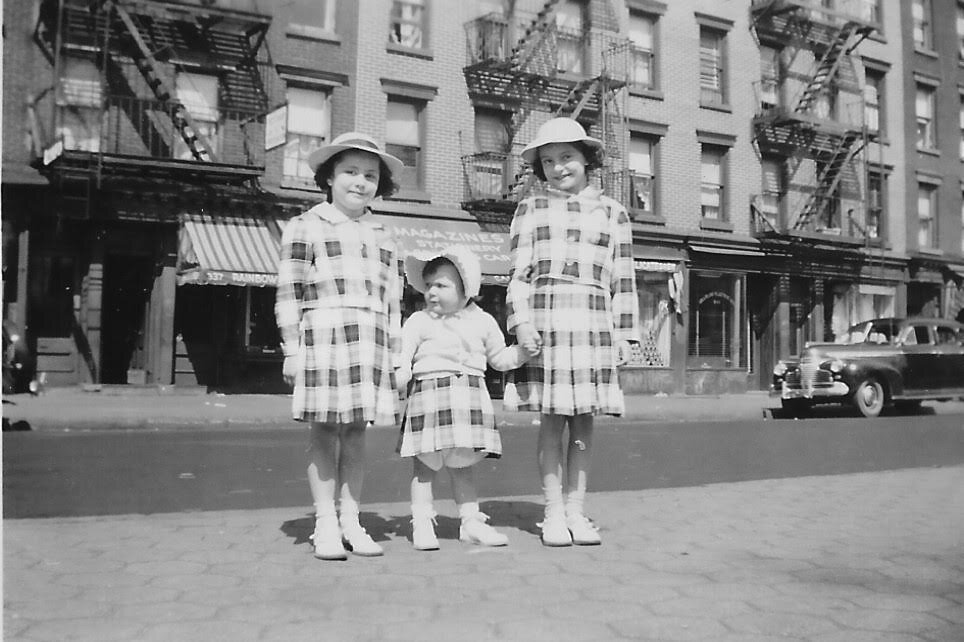
The author and her sisters.

The author and her sisters.

From the Big Apple to a Historic Alabama Town

My unique story began long before the last twenty-five years of living under Alabama’s twinkling stars, the Milky Way, and a moon so bright, the craters define themselves. Before my stars fell on Alabama, I was a New York City girl who found herself again during the writing of my memoir.

Can you imagine discovering old neighborhoods, both, now historic landmarks. It is the evolution of time – old places change, new generations live to pass the stories. I am privileged to share a story not too many families can tell about growing up in New York City, inside a library, of all places. 

Baseball was king during the depression and post-depression days. It was a part of our lives and Dad’s favorite sport. Dad played baseball on his time off at Ebbets Field in Brooklyn. Legends like Robinson and Stengel made their first home runs there. Dad played local teams when the Dodgers played out of town. Yogi was once quoted when he invited a friend to dinner and gave him directions to his home, “When you come to a fork in the road, take it.” The guest yelled out while Yogi drove away, “Left, or right?” In the end, both roads led to his house. We still use the quote nowadays, but it is not Yogi’s. He said it, and that is all it took for fans to repeat it and for motivational speakers to run with it. 

It was around 1937 when Dad began his library career washing down the marble statues at the Main Library on Fifth Avenue (now Stephan A. Schwarzman Building). Not long after, he applied for a custodian position at the Rivington Street branch, downtown Manhattan, near Orchard Street where Helen was born. 

Middle sister, Irene, and I were born when Dad transferred to the Tompkins Square Library Branch in the 1940s on the lower east side. In 1957, he moved us to the St. George library branch on Staten Island. Our apartment had a separate side entrance. It was a noticeably quieter place compared to the hustle and bustle of the city. Soon enough I had sleepovers and friends and we shared many stories about exploring the library during high school days. I loved my lifestyle and my new friends.

Sisters Helen, Irene and I particularly enjoyed the library when it was closed on holidays and Sundays. We rode bikes around the book stacks, Helen took piano lessons and celebrated her sweet sixteenth party in the Banquet Room. I practiced cheerleading with friends, performing jumps and cartwheels and we imagined ghosts were alive in the many books that surrounded us.  Meanwhile, Mom, an accomplished seamstress, made our clothes, cooked, and kept our home running smoothly.   Meanwhile, history made my memoir so much more than about our lives. It was clear that I was a part of the history of a generation long gone and an era which shaped America. 

Carolyn Rhodes and her family in  In front of the Tompkins Square  Public Library, East 10th Street, New York. 

Carolyn Rhodes and her family in In front of the Tompkins Square  Public Library, East 10th Street, New York. 

Libraries Are Like Museums

The branch libraries displayed valuable art sculptures, art, and prints, often lithographs from famous artists, although not quite as elaborate as the Fifth Avenue 42nd Street Main Library, (Name). Special artifacts were housed within glass cabinets to admire. There were some bronze statues and ornate frames, all valuable. The music room was stocked in both libraries with record albums, sheet music, biographies of famous musicians. In the St. George library, we had antique ships in a bottle and wooden ships with sails sitting on higher shelf in the children’s room. In the music room, I listened to Monk with Irene and Mozart with Helen but tuned into Broadway show albums which is where my love of dance began. Musicals were popular in the fifties and sixties – My Fair Lady, Guys and Dolls, Carousel, Showboat, Oklahoma, American in Paris, and Singin’ in the Rain. 

 The library of the fifties, sixties and seventies was “our” information highway, our computer of the day. Librarians, usually women, and an oak card cabinet directed us to a shelf on a bookshelf someplace unfamiliar. Modern day librarians have many more tools to help a patron gather information, from anyplace in the world. You can ask a librarian via email and you will get an answer without an exceptionally long wait. That is how much easier it is to become an author today with research at our fingertips using technological tools, great software and computers, smartphones. Presently libraries offer free events to teach these skills-- so needed in this century.  A librarian is still your best guide. Believe me, they have connections to information you may not know exists as I found out.  

From Eutaw, Alabama to Tuscaloosa

Eutaw is a quaint town and passed the test for charming, quiet, historic, and less chaotic. It seemed the perfect place to consider moving to after my husband passed away at forty years old. A close friend who lived part time in Eutaw, and the other half in the city, invited my son and I to stay a while in town before making a big decision to pack up. There were available affordable homes with rose gardens, big yards, smiling teenagers excited for us to come; beautiful churches and homes built before the Civil War with antique shops, a pizza parlor run by a teacher from the private school and a rental video shop. We moved, all three of us – me, my son and Ziggy, our dog.

Soon after The University of Alabama hired me as an Office Associate. Then I moved to Tuscaloosa. During those desk assignments, over the years, I took on extra work, edited a newsletter and a journal. I wrote feature articles for the Alumni Magazines at Culverhouse College of Business and other magazines. I sold antique jewelry at the local antique shop all while I worked full time. I learned to write better by attending conferences and joining writing groups. I never imagined writing a book, but retirement was the perfect time to consider it. 


Libraries Still Nourish This Writer

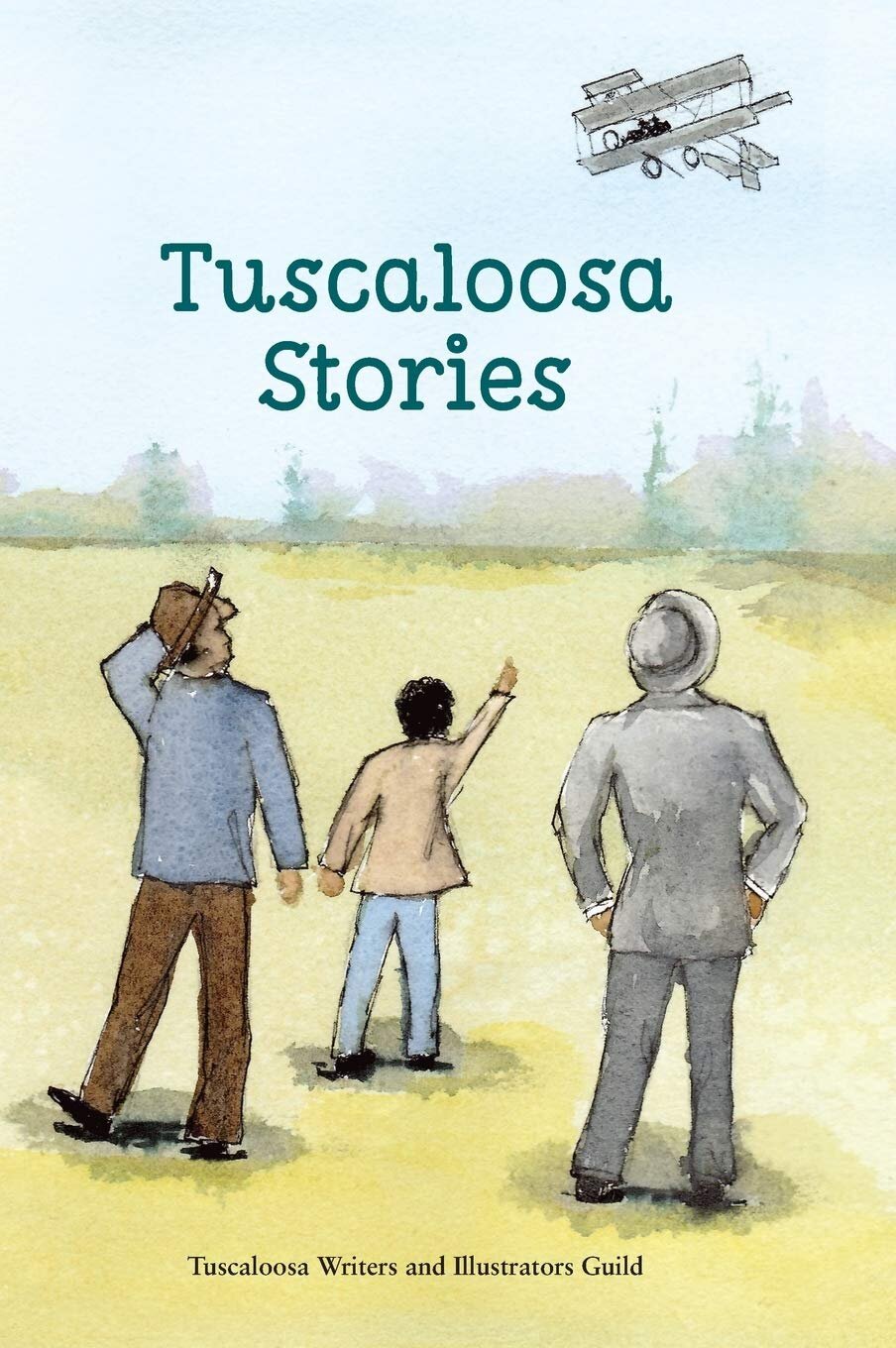
Recently, I had the pleasure and honor to be interviewed by librarian, Ron Harris, in his local author series with Tuscaloosa Writers and Illustrators Guild (TWIG).  We delved deeper into my book’s chapters—everything from documentation, my 65 photos and postcards from past travels, other historic references and the New York Public Library’s digital collection, and my favorite website. I read from my chapter on Carl Sandburg when I sat in his lap as he read to a group of children. You can watch and share the library video below.


The Rules of Baseball & Memoir-Writing

I thought a lot about baseball during the development of this memoir and the rules Dad taught me on our trips to Yankee Stadium when we stood online to buy hot dogs and soda before the game or intermission. So many years later in Alabama I hit some home runs. When I got lost, or lost sight of my goals, I could hear Dad cheering me on:“Take your time but hurry up. You can do it kid.” 


0-9.jpeg

A review by Don Noble of Carolyn’s new book

Library Girls of New York: A Secret Place

​A review by Don Noble

The millionaire industrialist Andrew Carnegie believed deeply in philanthropy. He was famous for giving a dime to anyone who asked, which sounds cheap, but is not really. Most millionaires did not want to be bothered.

Carnegie believed “Surplus wealth is a sacred trust which its possessor is bound to administer in his lifetime for the good of the community.” During the last 18 years of his life he gave away $350 million, about $65 billion in today’s money. He is in this sense a forefather of Bill and Melinda Gates and other generous billionaires of today.

Since Carnegie also believed that one should spend the first third of one’s life acquiring an education, he especially like to endow and build libraries. Carnegie built some 3,000 libraries, in the U.S., Canada and elsewhere around the world.

Of these, 65 were built in New York City and at first, 30 of these had apartments for the custodian and his family to live in.

Carolyn Rhodes’ father was one of these custodians. In this, her memoir of an unusual childhood, she tells how this was a 24/7 job. Early every morning, her father stoked up the coal furnace, so the building was warm for the librarians and first patrons when it opened at 9 a.m.

For their inhabitants, the buildings were not just warm; they were elegant. Carnegie favored the beaux-art style and hired fine architects. Besides living in beautiful surroundings, Carolyn and her two older sisters could use the library after closing hours and on Sunday to finish up schoolwork they still needed to do.

Over time Carolyn lived in two libraries: one in Manhattan and the other one on Staten Island.

In one chapter, Carl Sandburg sings and recites to a group of schoolchildren. Rhodes remembers one scene well, quotes Sandburg while sitting on his lap.

After high school Rhodes lived a while in San Francisco, during a ’60′s hippie stage. She trusted a cute stranger she met at a laundromat (he had a big, sweet, shaggy dog), but, after consuming “brownies laced with mind altering drugs and ... pills sprinkled on top,” she lost a few days. It’s not fair to expect people to remember the ’60′s.

Later, Rhodes traveled in Europe and worked in New York theater as a dancer and choreographer, including one show she directed during college and toured with. It featured Renaissance and Medieval musical instruments such as “sackbuts, zinks, [and] krumhorns” as well as lutes and bells.  The Troupe performed at Lincoln Center.​

As with several other segments, there was more to say. I would be happy to hear it.

Don Noble is host of the Alabama Public Television literary interview show “Bookmark with Don Noble.” His most recent book is Belles’ Letters 2, a collection of short fiction by Alabama women.
Guest User