Members of the AWC participated in a fun poetry workshop over the weekend with former Alabama Poet Laureate Jennifer Horne. For those who weren’t able to make it, click here to watch a recording of the virtual hangout. Enjoy and happy writing!
What’s happening in the Alabama writing world…
Members of the AWC participated in a fun poetry workshop over the weekend with former Alabama Poet Laureate Jennifer Horne. For those who weren’t able to make it, click here to watch a recording of the virtual hangout. Enjoy and happy writing!
The Alabama Writers’ Forum has extended its search for a new executive director to June 1, 2023. The application process is open, and an updated job description can be found below and at www.writersforum.org.
To apply, please send a letter of application and resume/CV to Alabama Writers’ Forum Search Committee, c/o Jay Lamar, writersforum@writersforum.org, or by regular mail to Alabama Writers’ Forum Search Committee, PO Box 4777, Montgomery, AL 36103-4777. For more information, please contact jaylamar@writersforum.org.
The Alabama Writers’ Forum was established in 1993 to honor the state’s distinguished literary heritage and support its ongoing, vibrant literary culture. Building on 30 years of success, it is poised to launch its next phase of advocacy and engagement on behalf of Alabama’s rich literary arts.
####
ALABAMA WRITERS’ FORUM Executive Director Job Position Announcement
The Alabama Writers Forum invites applications for the Executive Director position to be filled in Summer 2023. The Executive Director is responsible for implementing all AWF programs, writing grant applications, fundraising, developing new programs, hiring and maintaining appropriate staff, connecting with and supporting literary arts endeavors around the state, and working with the board of directors to carry out the organization's mission and aims. AWF is seeking a dynamic, visionary leadership with a proven record of arts administration and fundraising, with preference for literary arts administration and knowledge.
The Alabama Writers’ Forum was founded in 1993 to honor the state’s distinguished literary heritage and support its ongoing literary culture. Since 1997 it has been located in the state’s capitol, Montgomery, Alabama. AWF programs include Writing Our Stories, a nationally recognized creative writing program for justice-involved youth and general student populations. Its Alabama High School Literary Arts Awards program recognizes young writers and their teachers, and schools. The AWF website provides robust and up-to-date content for literary news, reviews, resources, and events. AWF works with a wide network of state and national partnerships to support, advocate, and promote writers and reading throughout the state. A partnership program of the Alabama State Council on the Arts, the Forum has been funded by national organizations, including the National Endowment for the Arts and LitNet, as well as by state agencies, corporate sponsors, and individual and corporate members. For an overview of the Forum’s programs, visit writersforum.org.
The application process is open, and applications will be accepted until June 1, 2023. To apply, send a letter of application and resume/CV to Alabama Writers’ Forum Search Committee, c/o Jay Lamar, writersforum@writersforum.org, or by regular mail to Alabama Writers’ Forum Search Committee, PO Box 4777, Montgomery, AL 36103-4777. For more information, contact Jay Lamar, Associate Director for Programs and Development, jaylamar@writersforum.org.
Executive Director Job Responsibilities
Responsible for planning, organization, and direction of the organization’s operations and programs
May develop new initiatives and programs based on interest and opportunity
Prepares accurate and timely reports on activities, funding, and performance
Identifies and applies for external funding; oversees grant management and reporting
Hires, leads and manages office staff, including teaching writers for the Writing Our
Stories program
Manages relationships with funding organizations, including State and Federal agencies,
corporations, foundations and other donors
Reports to the AWF board of directors
Executive Director Qualifications / Skills
Demonstrated leadership and management skills including financial management of substantial budgets
Ability to multi-task and take initiative
Works independently and has strong creative problem-solving skills
Awareness of and experience with regional and national literary arts/arts organizations
(NEA, LitNet, SouthArts, for example)
Can collaborate with diverse people and entities
Education / Experience Requirements
BA in English, creative writing, journalism, education, arts/nonprofit management or related field, or equivalent experience; MFA or other relevant graduate degree a plus
2-5 years nonprofit management experience
Demonstrated experience in these areas:
executive level project management
membership/volunteer management
social, print, and web media development and management
marketing and communications
successful arts advocacy at the local/state level
Experience with successfully seeking, managing, reporting on grants and other sources of
external funding
Experience working with state agencies and other nonprofits
Salary: from $60,000. Benefits: paid holidays (13 state holidays, 10 days over the December- January holidays) and personal leave (1 day a month for 12 months). Retirement benefits and health insurance supplemental contribution available. Residency in Montgomery or proximity strongly preferred. Anticipated start date: September 2023.
The Alabama Writers’ Forum is an equal opportunity employer. We celebrate diversity and are committed to creating an inclusive environment for all employees.
Alabama Writers’ Cooperative hosting ‘Poetry Hangout with Jennifer Horne’ May 13:
Former Alabama Poet Laureate Jennifer Horne to lead online event
The Alabama Writers’ Cooperative is pleased to highlight poetry writing at the next online workshop on May 13. Former Alabama Poet Laureate Jennifer Horne (2017-2021) will be the featured guest for the free Zoom event. A $25 annual membership is required to attend “Poetry Hangout with Jennifer Horne” from 10 a.m. till noon.
About the Workshop
Horne said she envisions the workshop to be a “virtual gathering” of poets “with a chance to reconnect with and meet other poets from around the state. This will be a chance for fellow poets to gather in a low-key, high-sociability hangout in anticipation of being together in person at the September A.W.C. conference,” which will be held in the Birmingham, Ala., area this fall. Poets should prepare to “read a favorite poem, do a couple of poetry writing prompts, share our responses and talk about our writing lives.”
A.W.C. 100th Anniversary and Conference
This poetry workshop is the next in a series of events to celebrate and commemorate the A.W.C. 100th anniversary this year. The online workshop series will culminate with an
in-person conference Sept. 8-10 at the O’Neal Library in Mountain Brook, Ala.
Getting to know Jennifer Horne
“I am thrilled to have Jennifer Horne join us for our online event in May,” said A.W.C. President Jessica Langston. “Her breadth and depth of writing experience is invaluable and she gives a distinct voice to the Southern experience.”
Having a love of reading and writing from an early age, Horne said she was “fortunate to have parents who encouraged these activities, especially my mother, who was a poet in her own right.”
During the pandemic, Horne and her sister self-published “Root & Plant & Bloom: Poems by Dodie Walton Horne”, in an effort to honor their late mother’s writing and her influence on them.
“It felt good to be able to honor her work, as she was such an important part of my becoming a poet,” Horne said.
Horne also recently finished writing a series of second-person addresses about her late father, titled “Letters to Little Rock”. Horne said she is very proud and “forever grateful for his support and encouragement” as she recalled one of his last journeys was to see her be commissioned as Alabama Poet Laureate in 2017. She said these are poems “that chart both grief and celebration”.
She is also involved in the co-editing of a collection of essays “from older southern women writers and artists and how they keep creativity alive.” Her authorship of the Sara Mayfield biography “Odyssey of a Wandering Mind: The Strange Tale of Sara Mayfield, Author” is now complete and will be available in 2024.
Explaining why she felt compelled to write Mayfield’s story, Horne said, “Sara Mayfield was in the air when I moved to Tuscaloosa in 1986, only seven years after her death.”
Mayfield had a varied and complex life with numerous twists and turns, according to Horne. She grew up with and wrote about Zelda Sayre Fitzgerald, she was a journalist, an inventor, and was even committed to Bryce Hospital by her family for 17 years, Horne said. While Mayfield’s life had “always fascinated me”, her story took on a new dimension as a gateway to “exploring larger questions of what happens to eccentric and creative women in the South, who don’t fit the conventional expectations of their families and the region,” Horne said.
Preparing for ‘Poetry Hangout with Jennifer Horne’
Participants in the upcoming workshop are encouraged to have one of their all-time favorite poems (on the shorter side) at hand and be prepared to read it. “I am always falling in love with a poem and try to read widely, a poem a day, at least. I’ve just finished ‘The Hurting Kind’ by Ada Limón and loved the title poem,” she added.
While serving as poet laureate, Horne said she was concentrating mainly on reading Alabama poets, “so now I’m allowing myself to branch out some and read more nationally and internationally.”
During the session, Horne will provide some poetry writing prompts “designed to promote a freshness of vision and approach”; then there will be plenty of opportunity for sharing the responses, she said. If anyone has questions to ask the whole group, in order to gain differing perspectives and insights from other writers, they are encouraged to bring them to the workshop.
“I want to facilitate poets being poets together and hope this will be an encouraging experience for those who participate.”
The workshop will run from 10 a.m. till noon on Saturday, May 13, with a short break in the middle. The Zoom workshop is free, but an A.W.C. membership is required. The annual membership fee is $25. To become a member, or to register for the workshop, visit alabamawriterscooperative.org. For more information, please contact Langston at jjsayspoetryplz@gmail.com.
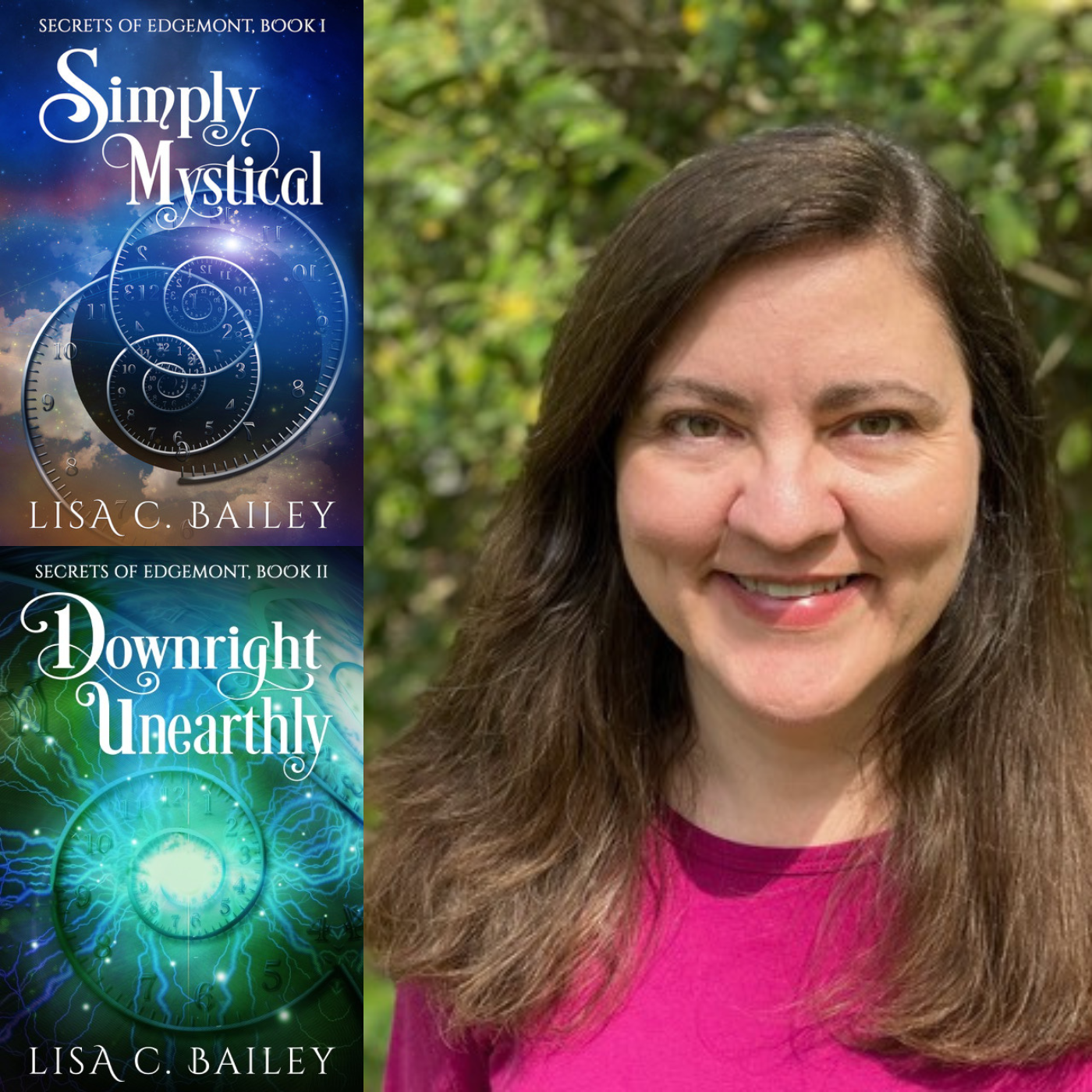
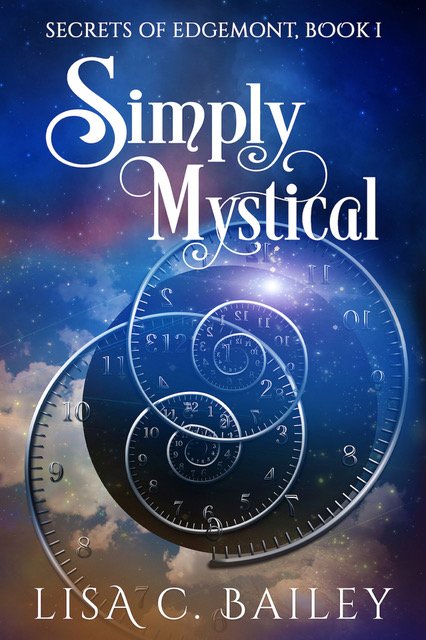
Lisa C. Bailey is the award-winning author of Simply Mystical and Downright Unearthly. It was a pleasure to be able to talk to Lisa about the fantastic, building characters, and, of course, her Secrets of Edgemont series.

Bradley Sides: Thank you for spending some time with us over at the AWC, Lisa. We’ll talk about your Secrets of Edgemont series in just a moment, but before we do, I want to ask you about magic—the supernatural, the strange, the fantastical. What draws you to writing this genre of literature?
Lisa C. Bailey: Thanks for having me on the blog, Bradley!
I’ve always been a big fan of books, movies, and TV shows that are either set in fantastical worlds or contain supernatural elements, so writing in the contemporary fantasy genre came naturally to me. The characters that inhabit these kinds of worlds may have supernatural powers or be based on mythical creatures, but it’s through the emotions they experience that readers connect with them, as is the case with any other genre. The stories and settings may be strange or otherworldly, but the themes are universal.
I enjoy writing literary fiction and nonfiction as well, but writing in fantasy worlds allows me to truly unleash my imagination. It’s also just plain fun to write!
BS: What books do you remember as being landmark kinds of books on your writing life? I imagine many of them, too, are fantastical, right?
LCB: I enjoy reading across genres—from fantasy and science fiction to romance and historical fiction to memoir and essays—and have favorite authors in all of them. But those books that hint at otherworldliness—magic within our own reality or other dimensions that exist just beyond our physical world—have had a huge influence on my foray into writing about the fantastical.
When I was a child, The Wizard of Oz and The Wind in the Willows were favorites, as well as classic fairy tales full of magical creatures and mystical lands. I made the jump from there to Stephen King in high school. I have no desire to write horror, but King is a master at the fantastical and at storytelling in general.
I’ve long been a J. R. R. Tolkien fan, and I adore Peter Jackson’s movie adaptations of The Lord of the Rings trilogy. I came to love the books of Anne Rice in college, especially The Vampire Chronicles. I was an adult when J. K. Rowling’s Harry Potter series came along, but those books were immediate favorites, and I love the movies, too.
I’ve also been influenced by science fiction authors such as Ray Bradbury and Jules Verne. Within the science fiction realm, I’m also a big Star Wars, Star Trek, and Battlestar Galactica [the original 1978 TV show] fan. They’re not books, but they certainly deepened my love of the fantastical and influenced my fantasy writing.
BS: I mentioned your series, Secrets of Edgemont, earlier. Did you know going into the first book that you had a multi-book project you were going to write? Or did the story grow into a series as you were working through the first book?
LCB: As evidenced by my previous answer, I love a good series. I always like to spend more time with characters I’ve come to know and love, whether I’m reading about them or writing about them. I think a lot of readers feel that way.
The first book in the Secrets of Edgemont series began as a standalone paranormal romance with the potential to grow into a series. The idea was that each succeeding book would be set in the same town but feature different main characters. But after writing what was basically the first draft, it became evident that it fit more into the contemporary fantasy genre and that I wanted to stick with these characters and tell a larger story for them. From there, a trilogy took shape in my mind. The original love story is still important and is a central element of the books, but the series is just as focused on the adventures, both earthly and otherworldly, of the main character, Gina Palmer.
BS: For those readers who aren’t familiar yet with your series, how would you describe it? Your elevator pitch, if you will…
LCB: Secrets of Edgemont is a contemporary fantasy series that features romance, mystery, humor—and a dash of Southern flavor.
And for each of the first two books that have been published so far in the trilogy:
Simply Mystical:
Gina Palmer’s illusion of being ordinary among the extraordinary is shattered when an unexpected reunion with a man she’s loved through many lifetimes sets her off on a journey to unlock her true identity.
Downright Unearthly:
Just when she and her otherworldly powers finally fit in, Gina Palmer is torn from her deceptively sleepy hometown and thrust into a world beyond her imagining, where she must face her ancient past and embrace even greater supernatural strengths to save those she loves.
BS: I am primarily a short story writer, and I’m working on my first novel. So, I’m particularly interested right now in how my characters are staying with me. I can only imagine that with a series those characters become like people you’ve known from long ago—like that connection really starts to run deep.
LCB: That connection truly does run deep. I have lived with some of my characters for many years now, but the newer ones have become just as beloved to me. They often lead me in surprising and delightful directions—sometimes planting ideas in my head in the middle of the night—and I care about what happens to them. They are like old friends. The villains are less lovable, of course, but they stay with me, too. They all keep me entertained and on my toes!
BS: I really love how your fantasy series is rooted in Alabama. Do you mind talking about your decision to include that southern backdrop?
LCB: Talk about writing what you know! I was born and raised in a small town in Alabama and have lived in and around Birmingham all my adult life. Edgemont is a fictional town, but it’s based on towns and neighborhoods I’ve either lived in or visited throughout my life. So, for me, the setting was a no-brainer. Showcasing fantastical elements against such an ordinary backdrop is quite delicious to write, and I think it’s fun for the reader as well.
BS: Did you find any limits, as you were writing, to having an Alabama setting?
LCB: I found it rather freeing. Because I’m so familiar with the setting, I didn’t have to do any extensive research about the terrain or the flora and fauna. It also provided a platform in which to highlight the good things about living in Alabama—the beauty and breadth of its biodiversity, the warmth and humor of its people, and so on.
Without giving away any spoilers, I’ll just say that not all the scenes in the second book take place in Alabama. Because this new setting is completely made up, I still didn’t have to do any major research, and I really let my imagination run wild! But readers seem to love Edgemont, Alabama, and it will remain the home base for the series.
BS: You told me the other day that you are working on book three. How’s it going? Any idea when it might be releasing?
LCB: Book three is starting to take shape. I don’t outline, but I do make what I call a plot summary—a sentence or two about what will happen in each chapter. Things usually evolve as I write the first draft, but having that loose structure helps me stay on track and not get too bogged down in the middle. So, the plotting is done for the third book, and I’m writing the first draft now.
The series is rooted in the otherworldly, and the second book literally visits another world. The third book will go beyond even that. It’s tentatively scheduled to be released in the spring of 2024.
BS: Best of luck, Lisa, as you continue your series, and congratulations on all of your writing successes so far!
Award-winning author Lisa C. Bailey writes about people—and animals—who tend to find themselves in fantastical, sometimes perilous, and often comical situations. Her first novel, Simply Mystical, was published in 2021. She holds a degree in journalism from The University of Alabama and has worked as a writer and editor for national consumer magazines and university publications, both full time and as a freelancer. When not writing, reading, or streaming movies and TV shows, she likes to explore the natural world through hiking and bird-watching with her husband and their two dogs. For more, visit lisacbailey.com.
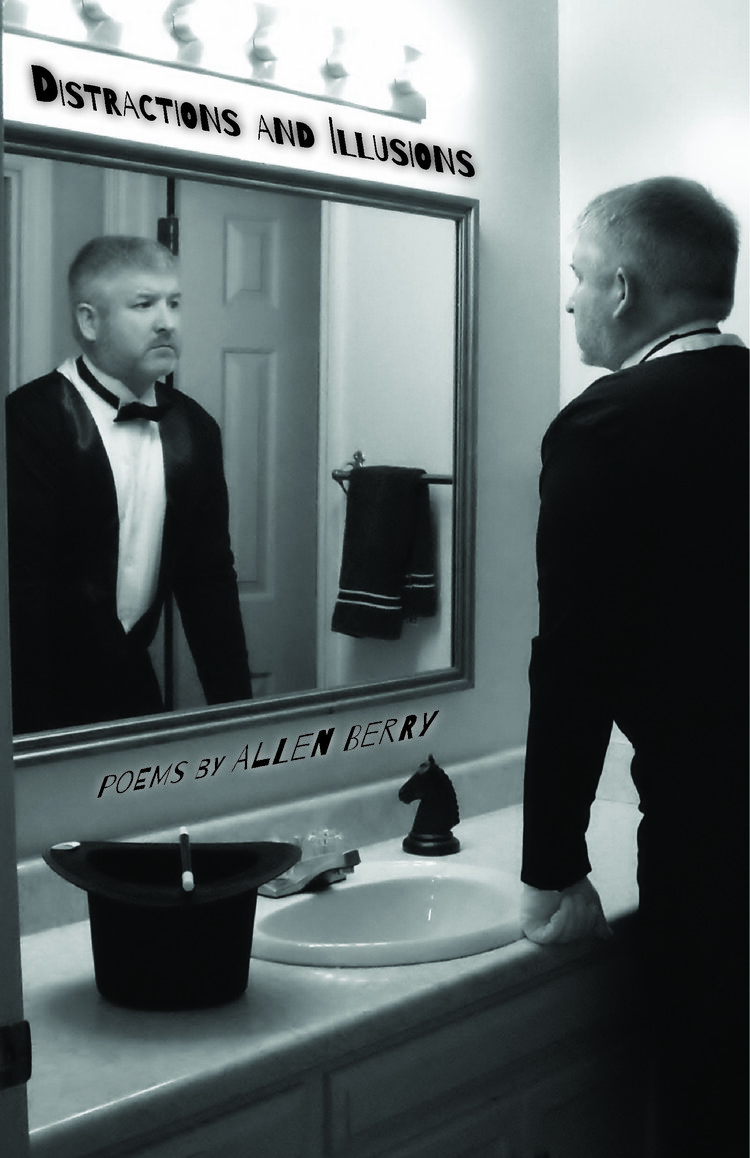
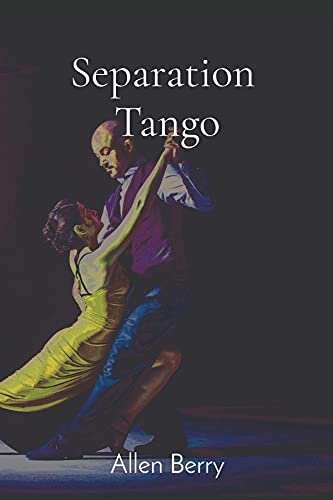
Allen Berry is the author of four collections of poetry: Travel for Agoraphobics, Distractions and Illusions, Sitting up with the Dead, and Separation Tango. It was a pleasure to be able to talk to him about the Alabama Poetry Delegation, time, and his current work.
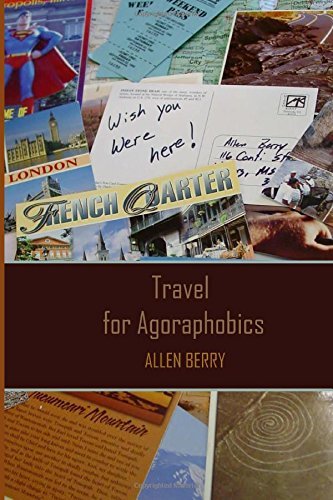
Bradley Sides: First off, Allen, congratulations on the recent news of you being named as one of the five poets to make up the Alabama Poetry Delegation. Sounds like a wonderful opportunity! Do you mind talking a bit about what the Delegation is—and also about your planned project for your region?
Allen Berry: Thank you so much. The Poetry Delegation is the brainchild of state Poet Laureate, Ashley Jones, to promote poetry around the state. The Alabama Poetry Delegation empowers five delegates to serve in five designated multi-county regions throughout Jones’ tenure as Poet Laureate (2022-2026). Delegates are tasked with crowdsourcing and creating events and programs for the regions that they serve and in which they live. Our region is Region number one, and we are given the freedom to create a program to increase the awareness about poetry in the public sphere. For my particular project, I’m going to resurrect a program I started with an excellent group of fellow poets back in 2001, the Limestone Dust Poetry Festival. The original festival ran for about ten years, taking a hiatus when my successor did as I had done a few years earlier and returned to school to pursue a masters degree. The goal of the original festival as well as Limestone Dust 2.0 is to bring together the various poetry movements for a day of celebration and sharing of one another’s work.
BS: I know you were born and raised in Alabama, so to be able to help grow the poetry community in your home state must be a really special feeling.
AB: Absolutely. There are a number of poets here in North Alabama just as there were some 20 years back; the various poetry communities are a bit insular, working, writing, inspiring one another, but rarely do they seem to come in contact with one another. The real joy, for me, is getting all these various poets together to share and appreciate each other’s art. Most folks know Huntsville as the Rocket City, and it is. It is also a hub for writers. The idea that we can raise awareness of that fact, even grow poetry as a community and a movement is very exciting.
BS: Let’s talk about your poetry. I’m always interested in how time shapes our work as writers—how pieces of our voice stay the same while other parts of us might transform entirely. You’ve had four poetry collections published throughout the past (almost) decade. In reflecting on your books, what elements of your work do you see reoccurring?
AB: Excellent question. I would have to say that the themes of loneliness and loss have pervaded the work, particularly my chapbook Distractions and Illusions, which explores the ways we hide the truths of the world from ourselves. I write a lot about the embarrassing business of being a human being, pursuing love, and the earnestness of that pursuit. The human condition, as painful as it can be, is also by turns noble, and heroic. As a good friend of mine once stated, “Poets have the gift of an extended goodbye.” Writing about love, loss, and about loyalty to those who have gone on, for me, have been the most fruitful topics for writing. I find myself returning to the same well time and again to drink from experience and craft new work.
We are born alone, often times we live alone, and yet that very loneliness unites us. There is a great nobility in the struggle, and I hope that through my poetry I will be able to reach those who feel that loneliness all too keenly. If I can offer even one of them the sense that they are seen and understood, I’ll have done what I set out to do and that maybe, to paraphrase Kerouac, my efforts will make our lot a whole lot lesser. On a lighter note, I try to incorporate a lot of humor into my work. Given the Human Condition, the only bulwark that we can raise against the indignities endemic in life is humor. Even the most serious of us can be funny, if only in our most guarded or vulnerable moments. My poetry laughs at the beautiful tragedy of humanity in a way that is not fatalistic, but intensely hopeful.
BS: In that same way, how has your poetry changed over the years?
AB: Hm… Much in the same way that you cannot see yourself changing in the mirror and don’t notice it until you compare your image with an old photograph, it’s difficult to say. I like to believe that the work has matured. When I was first writing anything that I dared share with the public, I rhymed more; something that is quite difficult to do well. I find rhyme, at least in my case, quite limiting. Not that it cannot be done and done quite well, I have colleagues who do wonderful rhymed poetry, but I’m confounded by rhyme. If anything, I would say that the work has matured in some ways. The tone is perhaps sadder but wiser. If you read the work of Catullus, the early works are in some cases like that of an angry teenager railing against those who have affronted him, but then toward the end of his works, particularly the elegy for his brother, there is a great beauty and maturity to it.
I like to think that my writing has changed in similar fashion, although hopefully not quite so dramatically. Most of my angry, adolescent, screed has been burned and the ashes buried at an undisclosed location.
BS: I read your latest collection, Separation Tango, last week, and I was quite moved by it. There is tenderness and loneliness and love and just a very honest kind of approach to capturing the emotional complexities of the human experience. A few of my favorite poems in your book are “Refuge,” “What I Remember,” and the titular work.
I won’t ask you which poem is your favorite (because it’s an impossible question for most of us writers), but I am curious which one is your favorite to read at events.
AB: Thank you for that. It was a long and personal work that took its form after the end of a particularly intense relationship. I had always been fascinated by the Tango, and its movements, particularly its inextricable relationship with romance. It occurred to me that a relationship, even the end and aftermath of a relationship is like the Tango. There are movements, slow and elegant, heartbreakingly beautiful that one goes through in the time after a relationship ends. I researched the movements and terms peculiar to the Tango and worked them in to the poem. To date it is one of my favorite works to read.
BS: How would you describe Separation Tango? What do you hope readers take away from it?
AB: I would describe Separation Tango as a love song to unspent tomorrows, the expression of the unused love at the end of a relationship, which is what ultimately encompasses the grief at the end of a love affair. If anything, I hope it offers something of a catharsis for the reader. I want, ultimately what E.M. Forster stated: “Only connect the prose and the passion, and both will be exalted, and human love will be seen at its height.” The book is a meditation and a love letter to all the unrealized tomorrows, saturated with love, crushed by disappointment, and plagued by confusion. The book is a love letter saying it wasn’t all for naught, just look at the beauty that came from it.
BS: What other poets inspire you the most?
AB: My greatest inspiration is a fellow Alabamian named Everette Maddox. He is mostly known as a New Orleans poet, but he was born and educated here before making the Big Easy his home. There is a rawness and daring to his poetry. He was a true master of the language. A colleague of mine studied under him at the University of Alabama, and he said something about Maddox that I have always marveled at and envied. He said “Maddox didn’t just write poetry, he WAS poetry.” No greater compliment could be paid to a poet, although his epitaph, “He was a mess,” is a close second.
I’m also a great admirer of the work of former Poet Laureate, Billy Collins. His deceptively simple conversational style is beautiful and extremely clever. He communicates the deep and powerful subjects that poetry has wrestled with, but does so in a fashion that is accessible, even playful at times.
I would be hard pressed to make a succinct list, as there are far too many luminaries to list here, but special mention should be made too of William Carlos Williams, whose minimalist, imagist style has long inspired me. Once in graduate school, during national poetry month, I slipped into the local Sears and posted his poem “This is Just to Say” –arguably the first refrigerator poem— on the door of a fridge in the appliance section. So much said in such a small space, the poem defines what is said by what is not said, and yet still has the illocutionary force of an apology without the force indicator. Such brilliance!
BS: Before I let you go, do you mind sharing what you are currently working on?
AB: Ha Ha, Ha! Well, I got married to my lovely wife back in October (of 2022), and given that much of my poetry was based on loneliness and heartbreak, the ultimate solitude of the human condition, I’m struggling to find a new direction. The beautiful trauma of this joining has left me somewhat without material. But it’s a problem I’m happy to have.
I had set out with the ambition of writing a poem a day for the entirety of the year 2023. I managed to write a poem for every day of January…. If not one on each day. I quickly abandoned my summit in favor of waiting on the generosities of the Muse. I’m sure she’s just busy, she’ll get back to me as soon she gets back into town.
If nothing else, I’ve participated in an April poetry marathon, that every year since roughly 2012 if memory serves. Hopefully, that will yield new work, perhaps even a new collection. Most of Separation Tango came from a previous marathon. In the interim, I will focus my energies on the Limestone Dust Poetry Festival 2.0.
BS: Thanks again for your time, Allen. Best of luck with your poetry and your work with the Alabama Poetry Delegation!
AB: It was my pleasure, thank you for you interest in my work and all the work you and the AWC do for writers here in our great state.
Allen Berry was born and raised in Alabama, and is a 2013 Ph.D. graduate of the Center for Writers at the University of Southern Mississippi. In 2001, he founded the Limestone Dust Poetry Festival in Huntsville, Alabama, and served as its director until 2009. His work has appeared in The Birmingham Arts Journal, What Remembers Us: An Anthology of Alabama Poetry, The American Muse Magazine and The Quint Magazine (Manitoba, Canada) additionally, he is a regular contributor to the Sundial Writer’s Corner on WLRH-FM. Dr. Berry teaches Composition, Literature, and occasionally Creative Writing at Calhoun Community College in Huntsville, Alabama. He is the author of four collections of poetry: Travel for Agoraphobics, Distractions and Illusions, Sitting up with the Dead and Separation Tango.
The Alabama Writers’ Cooperative will be presenting online workshops –“Freelancing Your Way to a Paycheck” and “How to Avoid the Slushpile and Land an Agent” by Karim Shamsi-Basha via Zoom on March 25 from 10 a.m. till noon.
Since its inception in 1923, at what is currently the University of Montevallo, the A.W.C. has worked to foster, inspire and promote all types of writing in Alabama. This will be the first of a series of events to celebrate the organization’s 100th. The events will culminate with an in-person conference Sept. 8-10 at the O’Neal Library in Mountain Brook, AL, outside Birmingham.
The upcoming freelance class will provide insights on how to write better story pitches as a freelancer and explore different markets for content. The class will be hosted by Karim Shamsi-Basha, who works as a freelance journalist, photographer, and author.
Basha will also teach a workshop about query letters during the Zoom session. He’ll share the query letter that helped him get his agent, and talk about the elements that grab agents’ attention, he said.
In 2021, “The Cat Man of Aleppo” was awarded a Caldecott Honor as one of the top childrens’ books of that year – Basha co-authored it with Irene Latham, and illustrations were created by Yuko Shimizu. Basha referred to the book as “as one of my all-time greatest achievements.”
His freelance work has appeared in a wide variety of publications from “Sports Illustrated” to the “Washington Post.”
Basha, who immigrated to the U.S. from Syria in 1984, writes full-time as the culture and food columnist for NJ.com and “The Star Ledger” out of New Jersey. The freelance portion will explore “effectively pitching magazines, publications and websites,” he said.
A.W.C. President Jessica Langston said this workshop “should give prospective freelancers some valuable insights to help them in their pursuit of landing writing jobs. It will also help the many writers out there who are hoping to secure agents to get their manuscripts published. We are very pleased to have Karim offering his wealth of knowledge and expertise on both these subjects.”
The workshops will be held on Saturday, March 25 from 10 a.m. to noon. The Zoom session is free, but A.W.C. membership is required. The fee for annual membership is $25. Visit alabamawriterscooperative.org to become a member, and to register for the workshops. For additional information regarding Saturday’s events, please email Langston at jjsayspoetryplz@gmail.com.
Karim Shamsi-Basha is leading this workshop about freelancing on March 25, from 10:00 AM - Noon. The event is free for all AWC members.
If you would like to register to attend, please complete the Google Form registration below. You will be emailed login credentials at the email address you provide during registration.
In my stories, there’s going to be something strange going on. It’s kind of my thing, I guess. My first collection was even billed that way–Those Fantastic Lives: And Other Strange Stories. One of my stories might introduce readers to a sneaky monster. Another might be set around a haunted house. The next one might occur during an apocalypse. One of the questions I’m most often asked as a writer of what can best be described as “Weird Fiction” is this: “Why do you write about such weird stuff?”
I try my best to answer as intelligently as I can, but my response essentially boils down to something pretty simple. I write about weird stuff because, to me, exploring the fantastical is the way that I best make sense of the real world.
My stories, like I’ve said, might include an otherworldly creature or revolve around a pretty-far-out-there event, but the stories aren’t necessarily about either of these things–not really, at least. Instead, my stories are about fear, loss, hope, and even love. For me, the weird is a vehicle to reach the emotional core I’m really going for.
Earlier, I mentioned that I might write an apocalyptic story. I’ve actually written a lot of these kinds of stories. The one I’ll talk about is titled “To Take, To Leave,” which appeared in the Winter 2022 issue of Psychopomp.
I formatted “To Take, To Leave” as a gameplay-style story. It follows an adult having to decide between letting someone die or allowing the apocalypse to begin. The gameplay element builds on the theme of choice because readers literally have to decide what will happen, but the fantastical elements also allow the story to build layer upon layer of choice. There is fire to possibly escape. There are things to save. There are lost people–and places and memories–that must be considered. There is the arrival of a child, falling from the sky, who breathes even more fire. The kid is dangerous and kind of scary, but do you risk it all to save this child? There’s also the obvious other layer of the literal apocalypse happening—and happening quickly. Readers have to make the choices rapidly or they know what’ll come. Really, the world is in their hands.
Going through “To Take, To Leave,” there are choices to make everywhere–both for the protagonist and for the reader. Without the magic–or terror, which might be a better word for what’s going on–the story wouldn’t land in quite the same way. The whole would lose its spark.
When I teach writing, I encourage my students to journey into the unknown–to think of a theme they want to write about and to allow some element of the fantastical to help them reach their destination.
How might a monster enrich a narrative?
What can the arrival of a ghost do?
Does introducing an apocalypse add a needed layer to your work?
Give it a try. Take risks. Mostly, have some fun. Honestly, at the end of day, writing Weird Fiction is just really, really fun…
Bradley Sides is the author of Those Fantastic Lives: And Other Strange Stories. His recent fiction appears at BULL, Ghost Parachute, Psychopomp, and Superstition Review. He lives in Huntsville, Alabama, with his wife. On most days, he can be found teaching writing at Calhoun Community College. For more, visit bradley-sides.com.
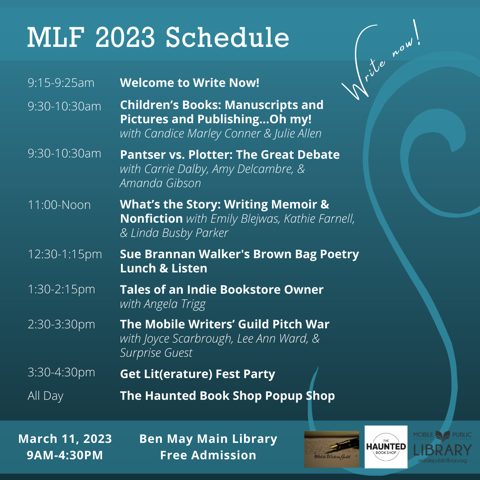
The 2023 Mobile Literary Festival will take place on Saturday, March 11 from 9 AM - 4:30 PM at the Ben May Main Library. Admission to the event is free. Those in attendance can expect a great slate of presentations, with topics covered ranging from writing memoir and nonfiction to even engaging in a “pitch war.” Mobile’s own The Haunted Book Shop will have a pop up shop onsite for the duration of the Festival.
For more information, please check out the 2023 Mobile Literary Festival’s Facebook page.

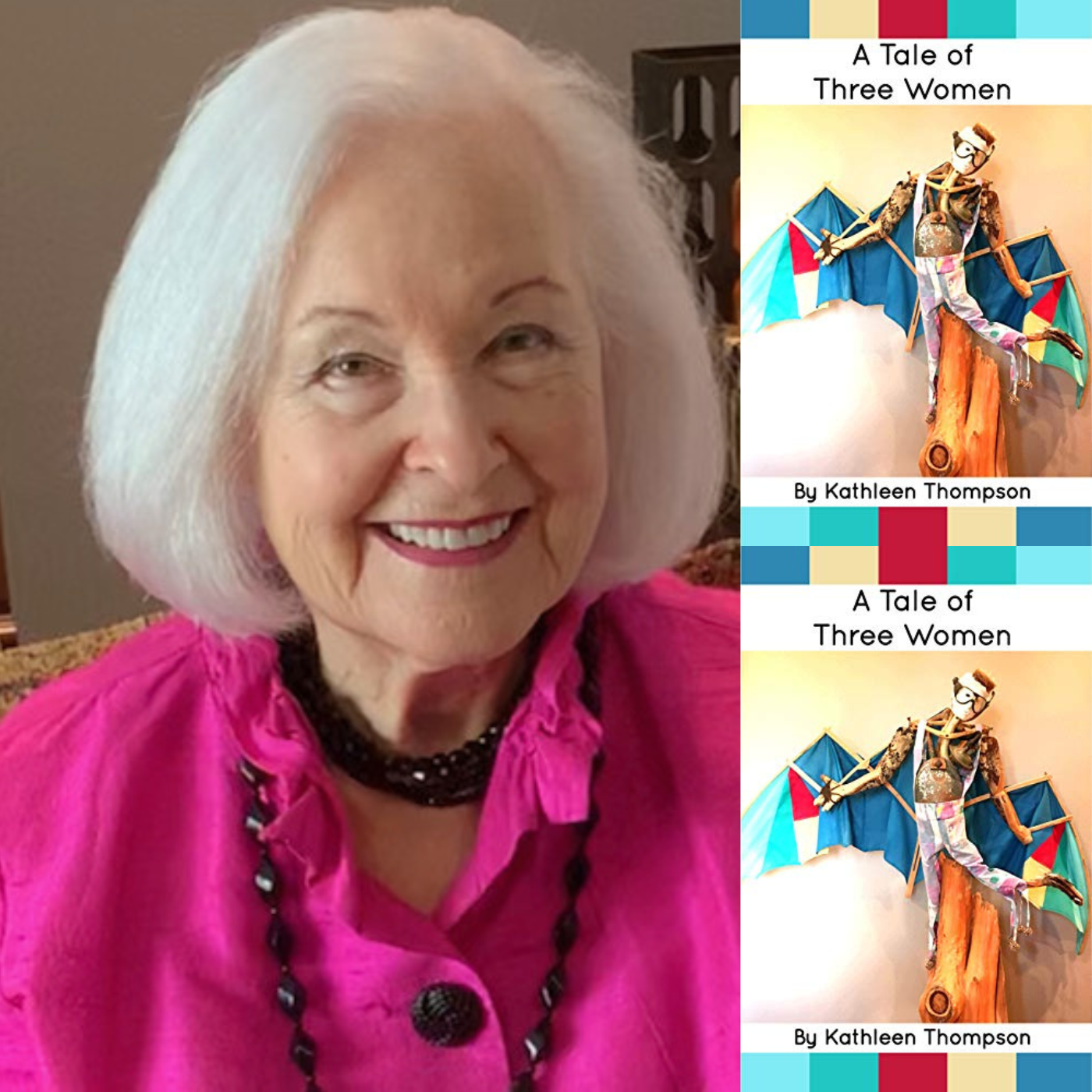
Kathleen Thompson is the author, most recently, of A Tale of Three Women. It was a pleasure to be able to talk with Kathleen about her award-winning fiction, her MFA days, and, of course, her novella.

Bradley Sides: Thank you, Kathleen, for taking the time to answer a few questions for us over at the AWC. I want to begin by talking about your participation in our most recent Contests. You were one of the winners in the “First Chapter of Novel” category.
For our readers who haven’t yet picked up a copy of the 2022 Awarded Writers’ Collection, which features your award-winning “Blame it on the Moon,” do you mind telling us what this opening chapter is about?
Kathleen Thompson: This first chapter sets a detailed scene of a day in the life of a sharecropper family in Tuscaloosa County, Alabama, in the 1950’s. Few readers will recognize such a scene, except perhaps from an old movie; however, the heart-stopping incident of a runaway mule hitched up to a wagonload of dried corn and all the consequences that such an incident might portend probably will not be lost on any reader. Pulling corn, picking cotton, reading by the light of a kerosene lamp—all paint a rather dark life for a fourteen year old and a family whose only means of transportation is a mule-drawn wagon and their water source, a well in the ground. Katie Lou Taylor wishes the Taylors weren’t so different. She wishes on the wings of a redbird, on the length of a pulley bone, on the half moon—whether the sickle moon is catching water, or pouring it out. What she really wishes is that the Taylors and their old sayings did not stick out like a sore toe.
BS: And the longer novel. You told me you’ve finished it, right?
KT: Yes, the novel is finished. For now anyway. (I’m not so naive after earning an MFA in writing. Anything sent to a publisher has to be edited. ONE. MORE. TIME.)
Even after all these years I have nearly finished an edit which would classify it as a coming of age novel for marketing purposes, and not just a young adult.
The initial story has a beard. I drafted it whole cloth after my first meeting with the Prattville Creative Writers in February, 1981. We had moved back to Alabama with my husband’s work after some ten years in Savannah. I had been actively dabbling in poetry and keeping a journal while teaching high school English. That first meeting set me on fire for writing. Prize-winning poetry and prose were both awarded and read. I can do this, I thought. And then I went home, immediately picked up my notebook and pen, and the story came gushing out. (BTW, that has happened only one other time. While I was earning the MFA in Writing from Spalding University, I had another story birthed whole: “Woman’s Wait.” It is published in an online magazine. Waypoints Issue 1.)
BS: You are a novelist, of course, but you are also a poet. For you, how similar are the two—novel writing and poetry writing?
KT: (Ah-ha, she says. Very similar, but very different. It’s not for everyone. But here’s a chance to let my brevity shine.)
My Ars Poetica, : )
Poem
A poem is writ in sweat and tears.
I write, my dears,
in sweat and tears
to quell my fears:
I will not knit.
A poem is writ in sweat and tears.
Seriously, for me the two genres are very close, so close that I could substitute the word novel for poem in my ars poetica. Poems can meander here and there and still hold together nicely if I begin with an apt image. My stories tend to be character-driven rather than plot-driven. Some days I couldn’t buy a plot. Now, a poem can happen when I’m not even looking. Sometimes it can sneak up on me unmentioned. But hardly ever whole cloth. Wherever in life there is a comparison, a metaphor, or just a simile, a poem is not far behind. I hunger for likenesses and differences in observing nature, and in human nature.
Sometimes I think my poems are prayers.
Writing is too hard to write about just any old thing; therefore, I write only about things important to me. That doesn’t mean I write myself into every character. How boring that would be.
I’m currently writing nonfiction as I edit fiction. Some days, I wonder if I’m writing fiction or nonfiction. Arthur Gordon once told me in an interview in Savannah that good writing is full of lies that tell the truth. I’m looking always for the truth. I use whatever genre serves me best at the moment to get certain truths.
BS: You got your MFA at Spalding. Did the program cater to both sides of your writing life? Or did you have to choose either fiction or poetry as your focus?
KT: My thesis for the MFA was a complete collection of short stories. That followed studying one semester of poetry, and then switching over to fiction.
The process you inquire about was the very core and beauty of Sena Jeter Naslund’s writing program and what it offered that others didn’t: a person could try two courses of study. When Sena came to sign Ahab’s Wife at Alabama Booksmith just after 9/11, I asked her the same question.
And my stroke of good luck continued. Sena said a poetry applicant from overseas was not coming that initial semester because of 9/11. She invited me to apply for her spot. I had already bought Ahab’s Wife at the Monroeville conference. After that first meeting with Sena, and reading her first blockbuster, and attending the first residency, I knew life had forever changed for this little sharecropper, who had owned only one book in first grade.
When my time was up with Sena at her signing that day at Alabama Booksmith, she offered this nugget roughly quoted, “Kathleen, it doesn’t matter which writing program you choose, you will excel in whatever genre or program that is. I can tell by your enthusiasm.” Such affirmation from a literary giant!
BS: I’m going to ask a very, very broad question: To you, what is A Tale of Three Women about?
KT: This book is about a simple case of mistaken identity and how that alters forever the lives of three women and one man. Most importantly, this could happen to “Everyman.”
One of life’s little ironies is that when I went to Spalding, third residency was held at The Brown Hotel. (Talk about the high life. That and the previous semester at The Seelbach.) The Brown Hotel was a part of the legacy of Louisville’s “invisible benefactor”. Another irony is the town of Brownville was Brown Wood Preserving Company, a creosote plant, a pole yard, and houses built for men who worked at the creosote plant. All four of my brothers lived in Brownville with their families at one time or another. My daddy took a job there and we moved in when I was in ninth grade.
Imagine my shock when I opened up the desk drawer in The Brown and discovered information of the owner and builder of this beautiful hotel: James Graham Brown. This was the man who founded the creosote plant in Alabama. His very plush life was written about by local Dorothy Park Clark. (Louisville’s Invisible Benefactor. The Life of James Graham Brown.)
This is the thing: as you keep writing, somehow the work comes to you in ways that help to embrace and layer your writing. Just now I read a paragraph which just by chance I had opened to, this “life story” and that very page mentioned Brownville and the creosote plant. (The book had been presented to my brother-in-law upon his retirement of running the crane on the pole yard and my sister passed it along to me.)
It reads, “In 1923 the Brown Wood Preserving Plant was built at Brownville, AL. This was the original site of the logging camp which had once furnished timber to Fayette. Here telegraph poles, barn poles, fence posts, and some lumber are treated with creosote or pentachlorophenol. Brownville is a “company town” with a commissary, a meeting hall, and many houses available to rent for employees.”
See my point? That little factual tidbit from this book lends many directions the plot of my novella might have taken had I only been aware at the time of writing. Reality of the situation was more engaging than anything I might have imagined.
BS: Parts of you are in this novel. How did you decide how much of your own life you wanted to include in these pages?
KT: At first, I thought nothing of what the title might suggest beyond the literal, except perhaps a “menages a trois.” That I really didn’t want! My third semester Spalding mentor thought that it was just too much to swallow for two characters to have the same name. I wrote a whole page argument about how it could and did work. (I will save you from that.) Actually, my novella was birthed from two short stories, and one was named, “A Tale of Two Women.” Also within my Spalding critical thesis were several “will/free or not?” stories based on some version of family incidents as told to me by a rather free-wheeling nephew.
Long story short: A simple case of mistaken identity in A Tale of Three Women alters forever the lives of three women and one man.
I must also include something that I learned from my mentor and friend, Helen Norris Bell when I interviewed her for my MFA Critical Thesis for Spalding. It was learned by Helen from the famous imagist poet, H.D. (Hilda Doolittle). Someone asked H.D. how she wrote her story; and she said, “I do not write the story; the story writes me.” Helen was struck by that line, even though she declared H.D.’s novel “autobiographical and not very good.” Helen said, “At some point in the story in which you are deeply involved, the story takes hold of you. It writes what it wants to write, what it needs. You are at the mercy of the tale.”
I embrace Helen’s (and H.D.’s) theory above all.
BS: As we close, you have a book event coming up soon. Fill us in on the details, so local folks don’t miss out.
KT: LOCAL AUTHORS DAY:
Meet authors and readers.
Seeing, Selling, Signing!
Autauga Prattville Public Library
254 Doster Street
Prattville AL 36067
Phone: (334)365-3396
March 2, 2023
5-7 p.m.
BS: Thank you again, Kathleen! I’ve enjoyed talking to you. Best of luck to you and your writing, and I hope you have a great event in Prattville!
After our interview, Kathleen was kind enough to send along some extra content to share with the AWC. Here is a publicity video that gives a little more about Kathleen and her work:
Kathleen Thompson holds a BS from the University of Alabama and an MFA in Writing from Spalding University. A former teacher, she is still trying to determine whether she is a vagrant poet who has fallen off the straight and narrow, or a writer who loves writing lies that tell the truth, or a nonfiction writer who makes much of metaphor. Neither her four poetry books, nor numerous award-winning stories published in journals, make the matter definitive, except to say she is a writer who loves to write in all genres. Most recently her novella, A Tale of Three Women, 2020, was published by Excalibur Press, Daphne, AL.