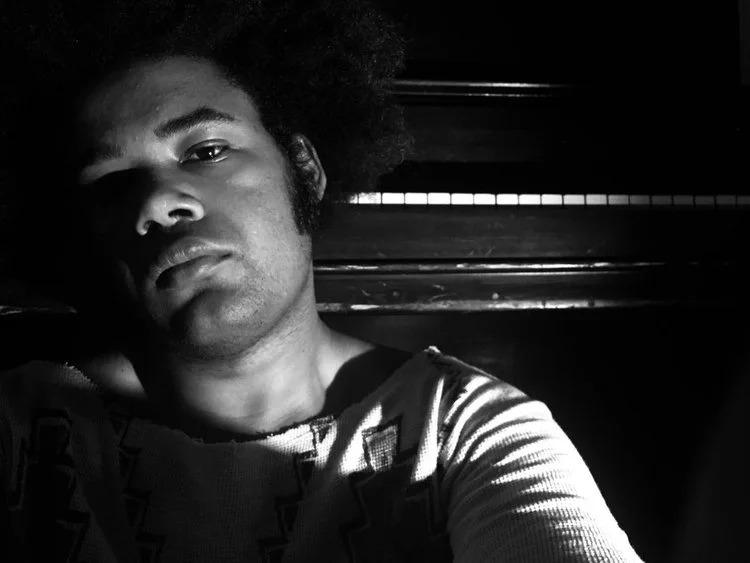
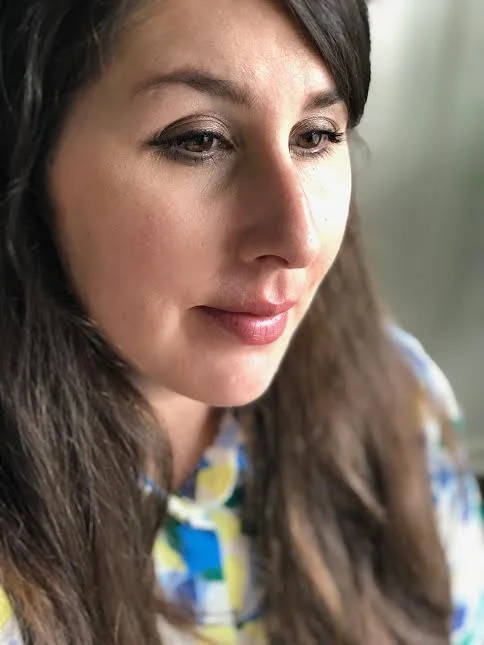
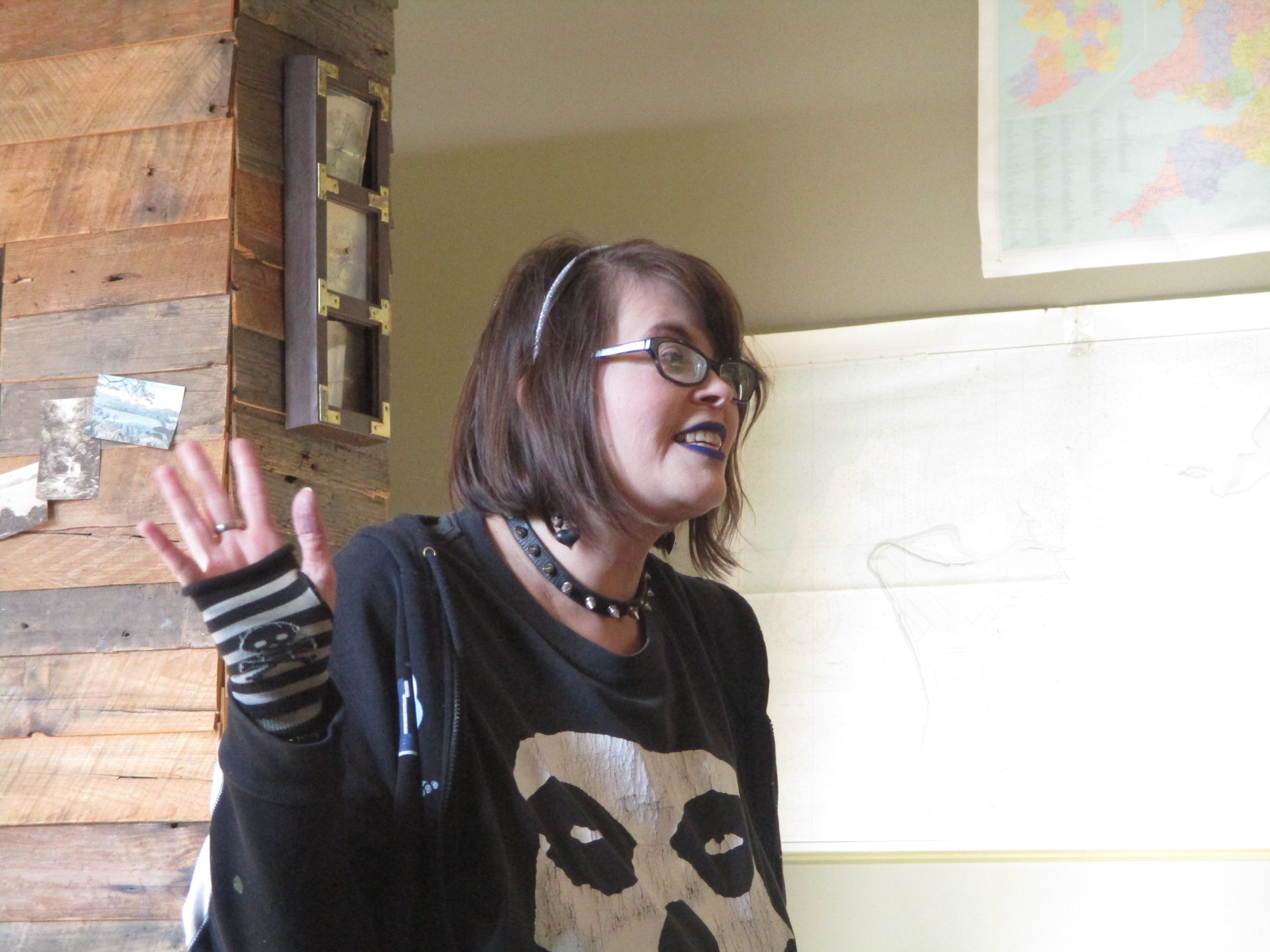
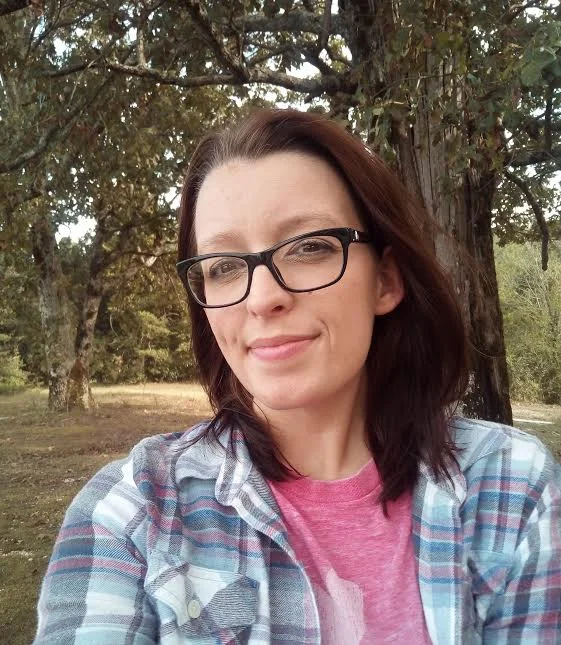
In this AWC conversation, Young Adult novelist Emma Fox speaks to poet Lori Lasseter Hamilton about life, breast cancer, poetry, and chutzpah. Diagnosed with breast cancer at the age of 34, four months before her wedding, Lori underwent a left breast mastectomy, six months of chemotherapy, six weeks of radiation, and a year of Herceptin treatment, from 2004 to 2005. She has been writing poetry since 1992 when she was a college student, and loves to share her poems at open mikes and poetry slams. She earned a bachelor of arts in journalism from UAB in 1998, with a minor in English.
EMMA FOX: Did you already write poetry prior to your diagnosis? If so, what developments or changes in your writing have you seen since then?
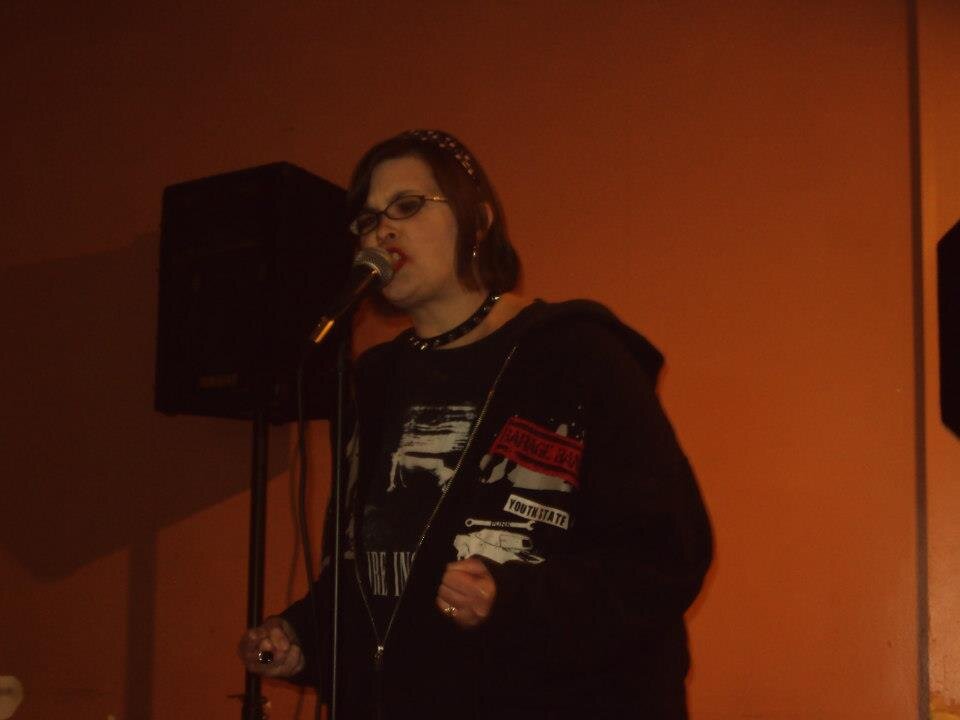
LORI LASSETER HAMILTON:I've been writing poetry since 1992 off and on, when I'm not experiencing writer's block. I started writing poetry and sharing it at open mikes when I was in college, prior to my breast cancer diagnosis in 2004. Before, I would use a lot of profanity and anger in my poems just for the sake of shock value. But when I was diagnosed with breast cancer, I realized that I needed to write with controlled anger, that controlled anger would be more effective and powerful in getting my point across. To just have one or two fist punches of anger here or there in a poem would hit harder. Not that there's anything wrong with anger or profanity. It's just that I wanted people to feel what I was feeling when I performed a poem onstage. I wanted people to see that breast cancer survivors go through a whole range of emotions -- not just excitement and happiness to wear pink tutus and pink feather boas at Race for the Cure -- but sadness, anger, irritation, depression, defiance and rebellion against society's expectations.
I knew that if I was practically yelling and cursing all the time in my poems, no one in the audience would sympathize or want to listen to me. I wanted my audience to see a breast cancer survivor as a whole person with a range of feelings, and not just a strong "survivor" or a pink clown.
EMMA FOX: Are there ways that poetry is especially suited to dealing with tough situations like you've undergone?
LORI LASSETER HAMILTON: I think slam poetry is the best way, for me anyway, to express what I'm feeling about being a breast cancer survivor. Competing in a poetry slam allows me to express with raw, brutal honesty all the rage, sadness, marred self-image issues, and irritation with society's expectations for breast cancer survivors to be "pretty in pink" overcomers with a pink smile and pink clown makeup and a pink tutu.
In slam poetry, you've got to come to the mic with everything you have and give it all you've got if you want to win -- you've got to be very dramatic, and you've got to be very loud, very honest, like a confessional poet. Slam poetry is raw, gritty, and brutally honest self-expression. You've got to give it all you've got, with all your heart, when you get on that mic at the poetry slam.
Slam poetry encourages you to get really real and write/perform in a confessional style like Sylvia Plath. A lot of slam poetry contains all the emotions -- humor, sadness, anger, and fear -- all in one poem, like a roller coaster. I mean, when you think about the absurdity of wearing a breast prosthesis and a stranger "feeling you up" in a retail mastectomy shop with a variety of bra styles and colors and a variety of prostheses like you're in the lingerie department at Macy's, like you chose this, like you chose to lose a breast, it's really like the "theatre of the absurd", and slam poetry makes you scream in one line, laugh in the next line, and cry in the next. It is theatre. I want to hit people in the audience with all of it.
EMMA FOX: How has poetry helped you through the healing process?
LORI LASSETER HAMILTON: Writing and performing poetry at slams and open mikes frees me to express things I wouldn't normally be able to express. I've worked in corporate office jobs all my life as a secretary/receptionist, so I have to dress, behave, talk, and act a certain way in the office. With poetry, I can express all the raw emotions I'm feeling. I can be brutally honest about my sadness over losing a breast, my sadness over how that's affected my sex life, and I can express in my poetry how angry I am about having to be a good patient and let them just take my breast just so I can live, even though I feel the quality of my life has been diminished.
I can express my rage at society expecting breast cancer survivors to be happy pink clowns who want to walk or run in marathons all the time and love to march in survivor's parades to the song "I hope you dance" by Lee Ann Womack. These types of emotions, you just can't express in a corporate office without your coworkers thinking you're a weirdo. I grew tired of having to be strong and be a survivor and pretending to want to walk in Race for the Cure every October. With biting sarcasm and seething rage, I can express my fatigue and irritation when I perform at a poetry slam.
EMMA FOX: Who are some poets that have inspired you in your writing?
LORI LASSETER HAMILTON: I'd have to say Sylvia Plath is my number one role model, because I consider her a feminist and a confessional poet. She questions society's expectations in "The Applicant":
"First, are you our sort of a person?/Do you wear/A glass eye, false teeth or a crutch,/A brace or a hook,/Rubber breasts or a rubber crotch,/Stitches to show something's missing? No, no? Then/How can we give you a thing?"
There's also Nicole Blackman, and the brutally raw way she critiques society. In her book "Blood Sugar", she talks about how even long-term boyfriends expect sex to be like a porno. Her poem "In the movie now" says:
"Dinner is you
and you are nothing like
the dead-eyed blonde women
he's been watching.
You're in the movie now."
She is unafraid to be graphic, raw, and brutally honest in her feminist critique of men's expectations.
I'm also inspired by the defiance of Arthur Rimbaud in his prose poem "A Season in Hell" :
"I called to the executioners that I might gnaw their rifle-butts while dying."
His defiance in the face of death inspires me because so many horrible things have happened to me in life, and I want to show the universe that I will not be defeated, that I am still rebellious and defiant.
And lastly, the words of Charles Baudelaire in his poem, "To the Reader", have always resonated with me:
"If rape and arson, poison and the knife
have not yet stitched their ludicrous designs
onto the banal buckram of our fates,
it is because our souls lack enterprise!"
Another defiant attitude, laughing in the face of danger.